「災害救助犬 捜索能力向上に伴う指導手育成講習」
新潟県十日町市にて「災害救助犬 捜索能力向上に伴う指導手育成講習」を実施
― Air Scent・Trailing・HRD、そして消防との連携へ ―
2026年8月21日・22日の2日間、新潟県十日町市において、災害救助犬十日町の皆様を対象とした「災害救助犬 捜索能力向上に伴う指導手育成講習」を実施しました。
今回の講習では、単に犬の捜索技術を高めるだけではなく、実際の遭難者・行方不明者捜索で求められる犬の能力と、その犬が示す情報をハンドラーがどのように読み取り、捜索判断につなげていくのかを大きなテーマとしました。
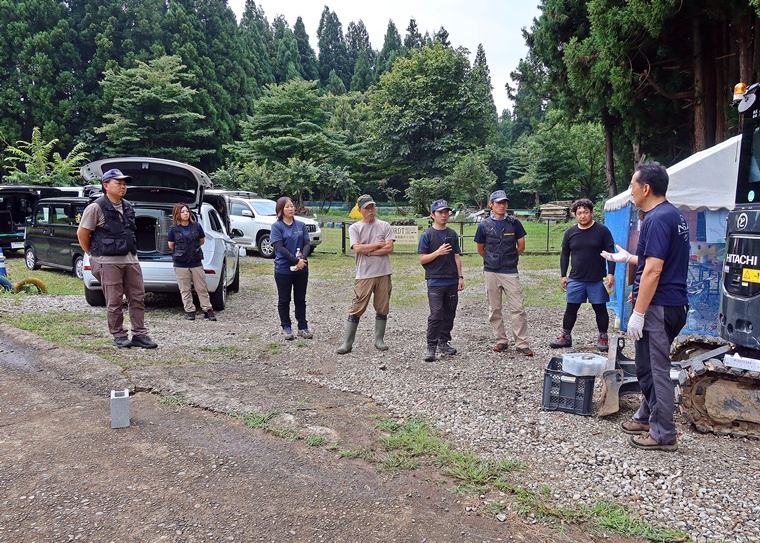
「訓練」から「実働」へつなげることを目指し、初日は十日町消防の施設にて、消防レスキュー職員の皆様にもご参加いただいて講義を実施。2日目はフィールドに場所を移し、Air Scent、HRD(Human Remains Detection)、Trailingの実技訓練を行いました。
K9 Handler Development Program to Enhance Search Capabilities Held in Tokamachi City, Niigata
— Air Scent, Trailing, HRD, and Collaboration with Fire & Rescue Services —
On August 21–22, 2026, the Nippon Search Dog Association (NSA) conducted a two-day K9 Handler Development Program to Enhance Search Capabilities for the members of Disaster Search Dog Tokamachi in Tokamachi City, Niigata Prefecture.
The purpose of this program was not simply to improve the dogs’ search skills. A central theme was to examine what capabilities are required of search dogs in real-world wilderness and missing-person searches, how handlers can accurately read the information their dogs provide, and how that information can be incorporated into operational search decisions.
With the goal of bridging the gap “from training to operational deployment,” Day 1 consisted of classroom instruction at a Tokamachi Fire Department facility, with fire and rescue personnel also participating. On Day 2, we moved into the field for practical training in Air Scent, HRD (Human Remains Detection), and Trailing.
1日目 講義 ― 「訓練」から「実働」へ
初日の講義では、まず犬の学習や行動を理解するための基本的な考え方からスタートしました。
捜索犬の育成では、決められた訓練を繰り返すだけではなく、犬それぞれの性格や特性、モチベーションを理解し、犬が何を学習しているのかをハンドラー自身が考えることが重要です。
また、実際の捜索現場では、訓練とは異なり、人間側が「正解」を知っているわけではありません。
そのため、犬が臭気を捉えた際の行動変化や、逆に臭気が存在しないことを示す反応など、犬から得られる情報をハンドラーが正確に読み取り、それを捜索判断につなげる能力が求められます。
講義では、NSAがこれまで経験してきた実際の捜索活動の記録も紹介しながら、訓練と実働捜索の違い、捜索犬に必要とされる能力についてお話ししました。
さらに、捜索方法についても、
Air Scent(浮遊臭による捜索)
Disaster Search(災害現場での捜索)
Trailing(特定人物の臭気を追う捜索)
HRD(Human Remains Detection/遺体・遺体由来臭の探知)
それぞれの特徴と役割について説明しました。
一つの捜索方法ですべての行方不明事案に対応できるわけではありません。
行方不明となった状況、経過時間、地形、最後に確認された場所など、事案ごとの情報を整理した上で、「どの捜索方法を、どのタイミングで投入するのか」を考えることが重要になります。
Day 1 — From Training to Operational Deployment
The first day began with the fundamentals of understanding canine learning and behavior.
Developing a search dog involves far more than repeatedly practicing predetermined exercises. Handlers need to understand each dog’s individual temperament, characteristics, and motivation, while continually asking themselves what the dog is actually learning through the training process.
Unlike training, in a real search operation, we do not know where the “correct answer” is.
Handlers must therefore develop the ability to accurately recognize and interpret the information their dogs provide — including behavioral changes when the dog encounters scent, as well as behaviors that may indicate an absence of target scent — and use that information to support search decisions.
During the lecture, we shared examples and records from NSA’s previous operational searches to illustrate the differences between training scenarios and real-world search operations, as well as the capabilities required of operational search dogs.
We also discussed the characteristics and roles of different search disciplines:
Air Scent — searching for airborne human scent
Disaster Search — searching in disaster environments
Trailing — following the individual scent of a specific person
HRD (Human Remains Detection) — detecting human remains and associated decomposition odor
No single search discipline can address every missing-person case.
The circumstances surrounding the disappearance, elapsed time, terrain, last known location, and other available information must be evaluated in order to determine which search method should be deployed, and at what stage of the operation.
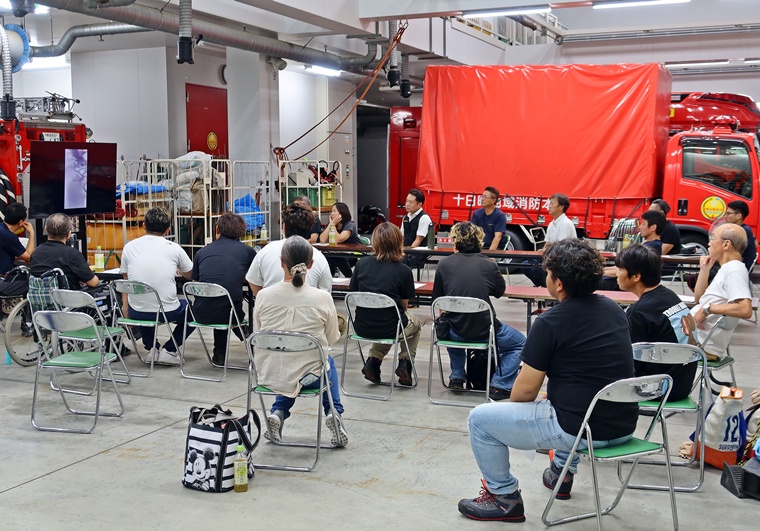
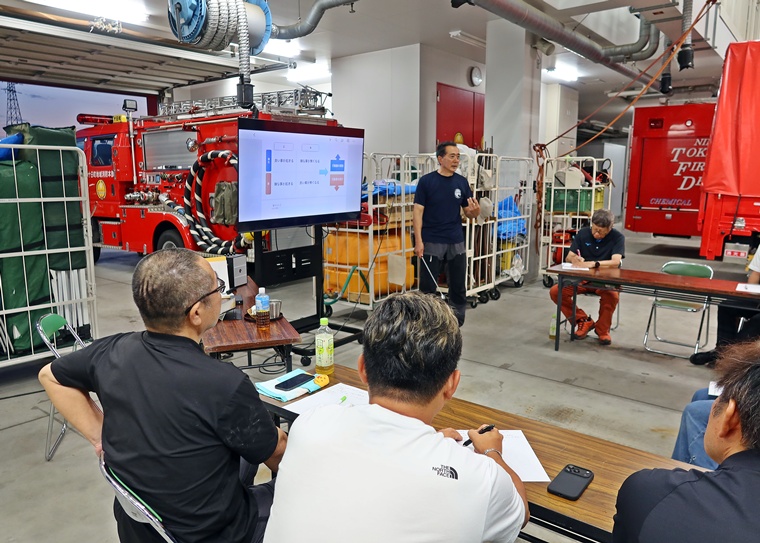
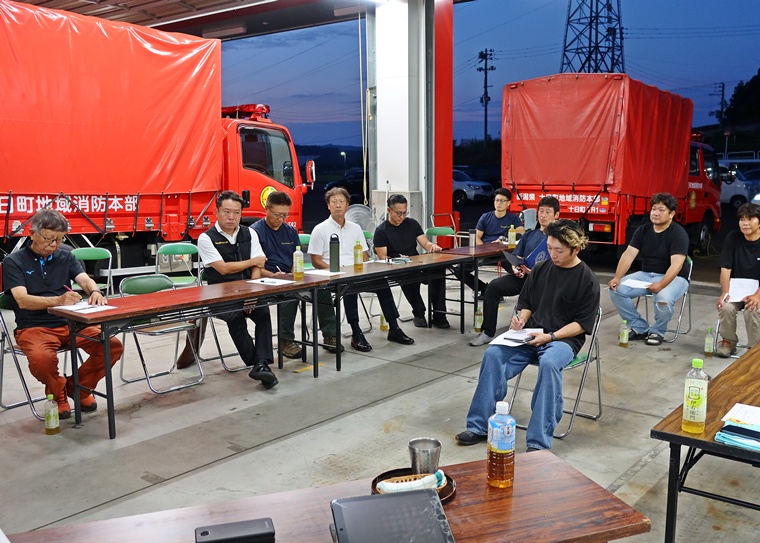
消防レスキュー職員の皆様にも参加いただき、犬を育成する側だけでなく、実際に捜索を指揮・実施する側と、この考え方を共有する機会となりました。
The participation of fire and rescue personnel also provided an important opportunity to share these concepts not only with those who train search dogs, but also with those responsible for managing and conducting actual search operations.
2日目 実技訓練
2日目は、前日の講義でお話しした内容を実際の犬の動きと結び付けながら、Air Scent、HRD、Trailingの実技訓練を行いました。今回の実技で重視したのは、単に「犬ができた・できなかった」を評価することではありません。
なぜ、その行動が出たのか。
犬は何を理解しているのか。
ハンドラーの行動が犬にどのような影響を与えているのか。
次の訓練では何を変えるべきなのか。
一頭一頭の犬を観察しながら、参加者と一緒に考えていきました。
Day 2 — Practical Field Training
On the second day, we connected the concepts discussed during the previous day’s lecture with the actual behavior of the dogs through practical training in Air Scent, HRD, and Trailing.
The focus was not simply on evaluating whether a dog “succeeded” or “failed.”
Why did the dog show that behavior?
What does the dog understand?
How is the handler’s behavior influencing the dog?
What should we change in the next training session?
We observed each dog individually and worked through these questions together with the participants.
Air Scent ― 犬の能力を引き出す訓練設定
Air Scentでは、犬が空気中を漂う人の臭気を捉え、臭源となる人物を発見し、ハンドラーへ知らせるまでの一連の行動を確認しました。
特に今回は、犬だけを見るのではなく、訓練設定そのものを見ることを重視しました。
Air Scent — Designing Training to Bring Out Each Dog’s Abilities
During the Air Scent training, we examined the complete sequence in which a dog detects airborne human scent, locates the person who is the source of that scent, and communicates the find to the handler.
A particular emphasis during this session was not simply on observing the dog, but on evaluating the training setup itself.
何をご褒美にするのか?
犬のどの行動を褒めるのか?
どのタイミングで褒めるのか?
ヘルパーはどのように犬と関わるのか?
訓練をどのタイミングで終了するのか?
What will be used as the reward?
Which behavior will be rewarded?
At what moment will the reward be given?
How should the helper interact with the dog?
When and how should the exercise end?
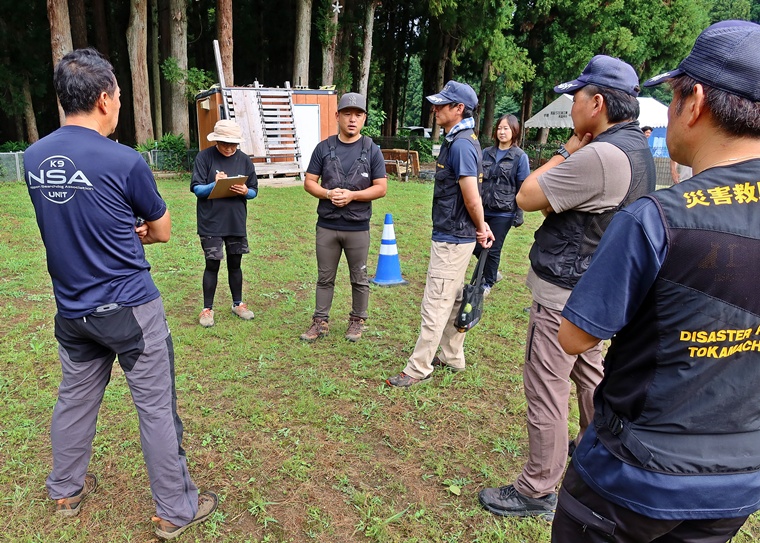
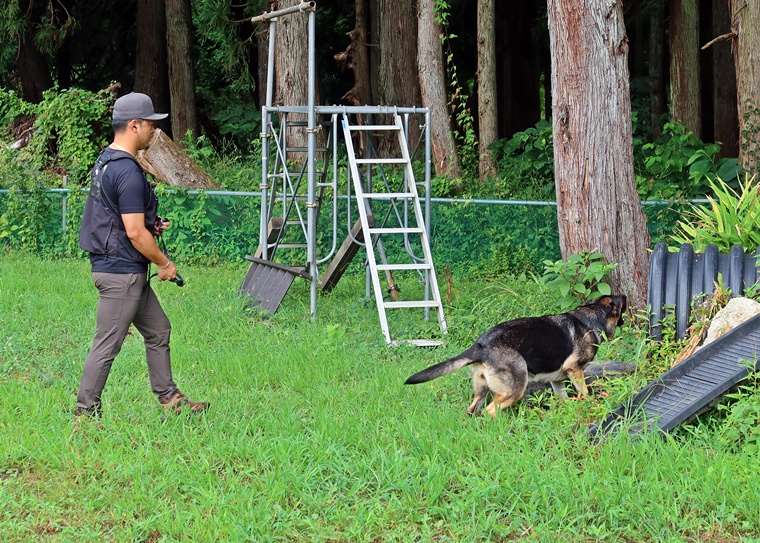
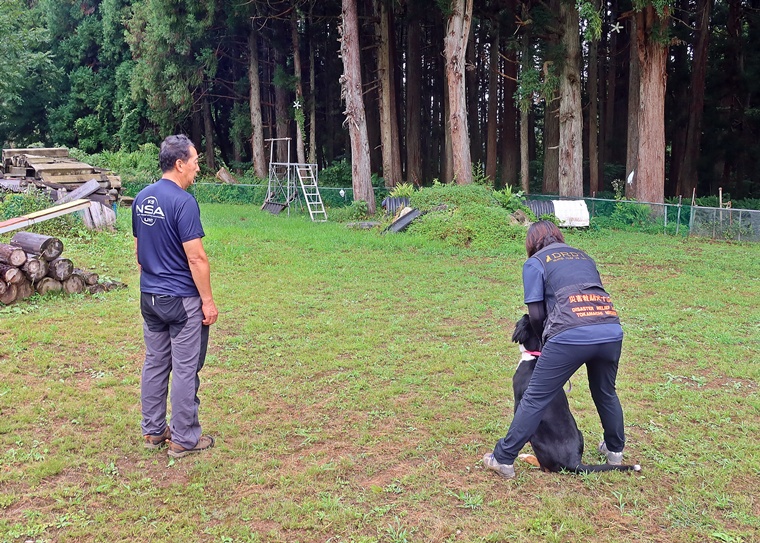
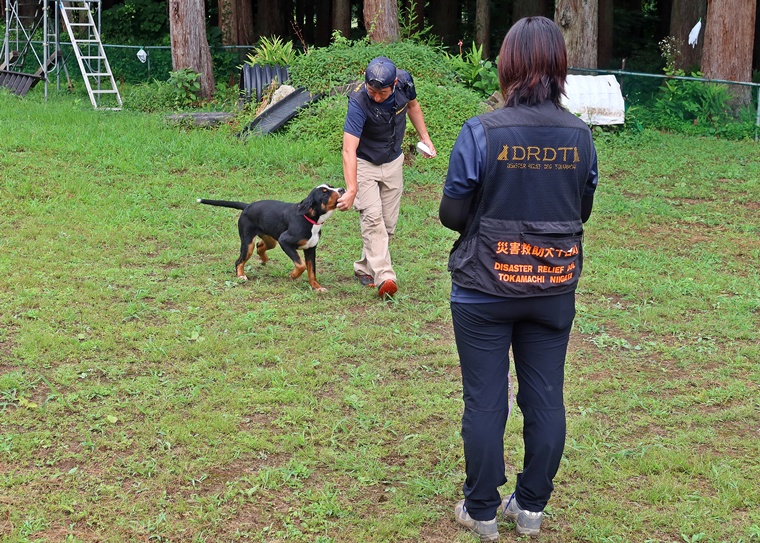
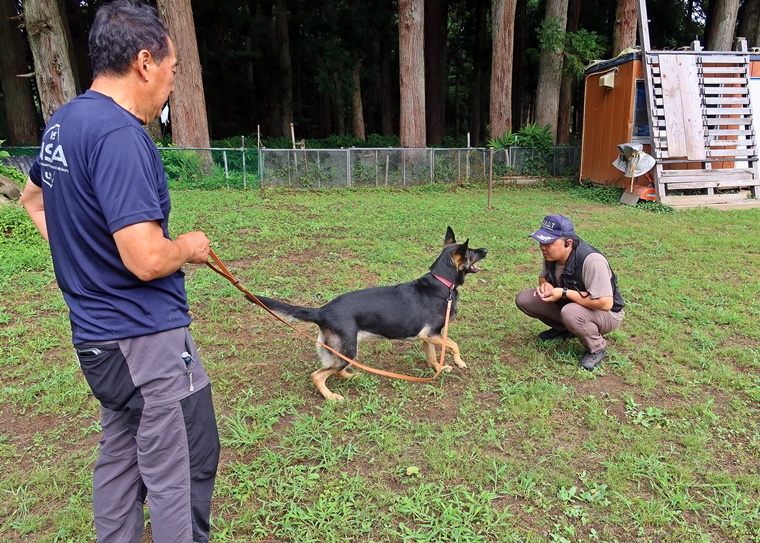
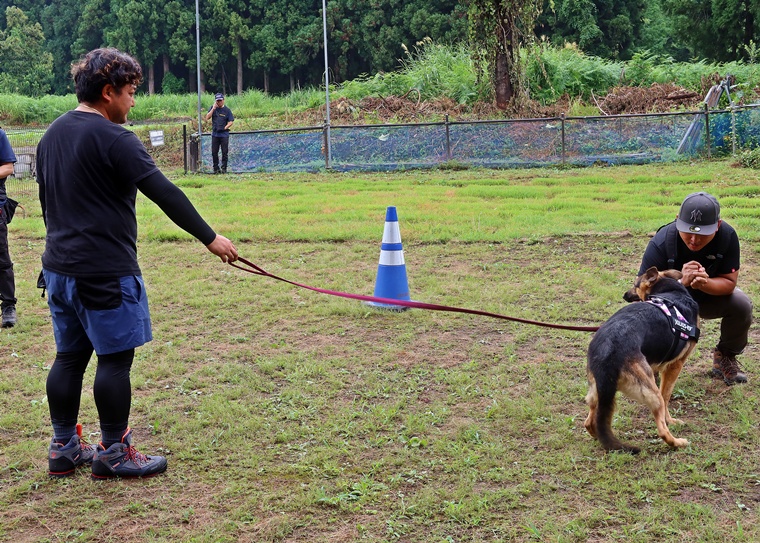
こうした一つひとつの設定によって、犬が学習する内容は変わります。
難しい課題を与えることが良い訓練とは限りません。
現段階では、それぞれの犬の能力や経験に合わせたシンプルな設定を作り、犬にできるだけミスをさせず、確実な成功体験を積み重ねることの重要性を確認しました。
Every element of a training setup influences what the dog learns.
A more difficult exercise is not necessarily a better exercise.
At the dogs’ current stages of development, we emphasized the importance of designing simple scenarios appropriate to each dog’s ability and experience, minimizing unnecessary errors and building a consistent history of successful experiences.
HRD ― 新たな捜索分野への第一歩
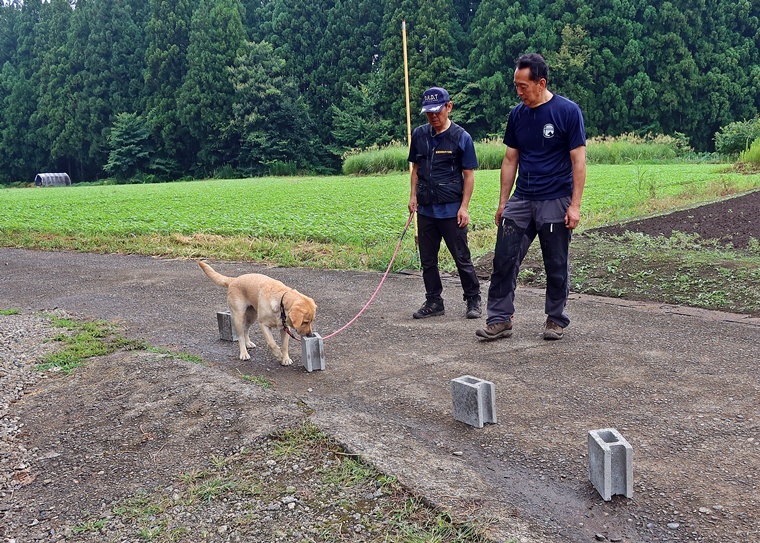
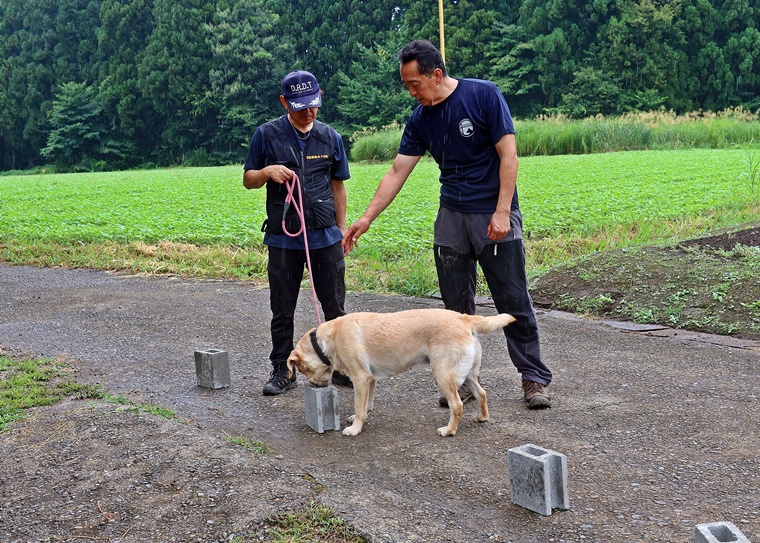
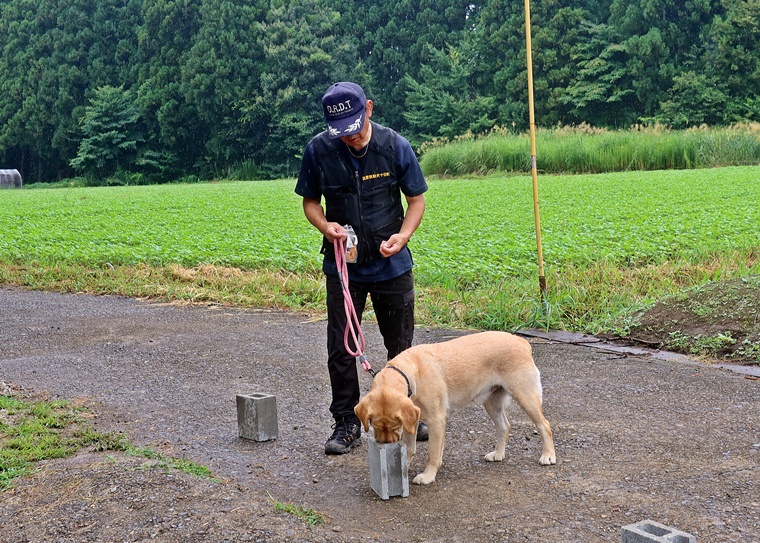
今回は、HRD(Human Remains Detection)の導入訓練も初めて行いました。
HRDでは、生存者を捜索する犬とは異なり、遺体・遺体由来の臭気を探知する能力を育成します。
導入段階では、犬に対象となる臭気を正しく認識させ、その臭気を探すこと自体に価値を持たせることが重要になります。実際の訓練では、対象臭に対する犬の反応を細かく観察しながら、興味や執着をどのように捜索行動へ発展させていくかを確認しました。
HRD — Taking the First Step into a New Search Discipline
This program also marked the first introductory HRD (Human Remains Detection) training for the team.
Unlike dogs trained to locate live subjects, HRD dogs are trained to detect human remains and associated decomposition odor.
At the introductory stage, it is essential for the dog to correctly recognize the target odor and to develop value and motivation for searching for that odor.
During the practical exercises, we carefully observed each dog’s responses to the target odor and examined how interest and commitment to the odor could be developed into purposeful search behavior.
同時に、ハンドラーが答えを知っている訓練だからこそ、無意識に犬を臭源へ誘導してしまわないことも重要です。
人が犬に答えを教えるのではなく、犬自身に臭気を探させ、その判断を信頼する。
これはHRDだけでなく、実働する捜索犬を育成する上で共通する重要な考え方です。
Another important consideration is that, during training, the handler often knows where the source is located. This creates the risk of unconsciously influencing or directing the dog toward the source.
Rather than giving the dog the answer, we must allow the dog to search independently and learn to trust the dog’s decision.
This principle applies not only to HRD, but to the development of operational search dogs in every discipline.
Trailing ― 「特定の人」を追うための基礎
Trailingでは、特定人物の臭気を手掛かりとして、その人物が移動した経路を追うための基礎訓練を行いました。今回は本格的な長距離トレールではなく、まず犬に、
Trailing — Building the Foundation for Following a Specific Person In Trailing, we worked on the basic skills required for a dog to use the individual scent of a specific person to follow that person’s route of travel.
Rather than beginning with long or complex trails, this introductory training focused primarily on motivation runs, helping the dogs develop a fundamental understanding that:
「この人を追うことは楽しい」
「この臭気を追えば目的の人物にたどり着ける」
“Following this person is fun.”
“Following this scent will lead me to the person I am looking for.”
という基本的な意味を理解させるため、モチベーションランを中心に実施しました。
Trailingでは犬の嗅覚能力だけでなく、ハンドラーのリードワーク、犬が臭気を捉えた時・失った時の行動変化を読み取る力、ヘルパーの役割、そしてトレールを設置する環境など、多くの要素が関係します。
Trailing involves much more than a dog’s olfactory ability. It also requires handler line skills, the ability to recognize behavioral changes when the dog acquires or loses the trail, appropriate helper work, and careful consideration of the environment in which the trail is laid.
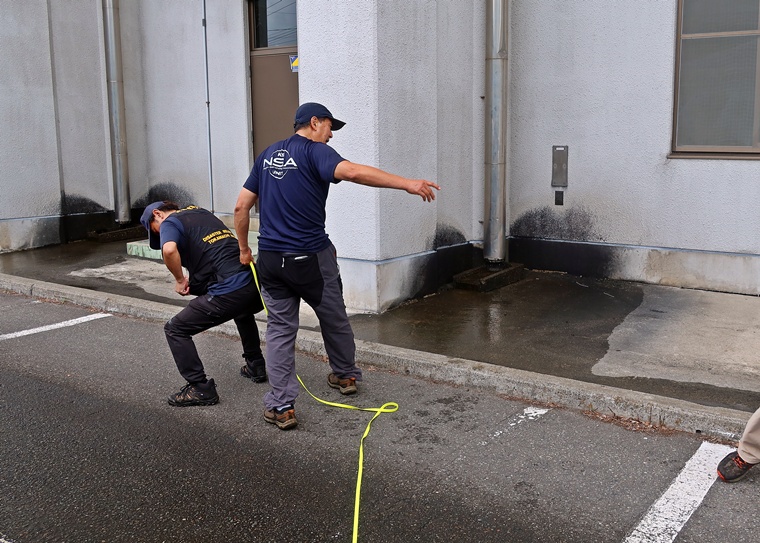
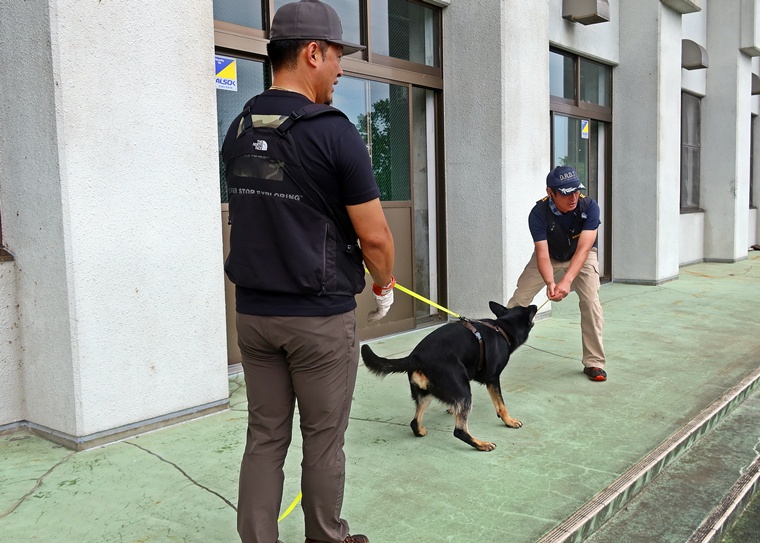
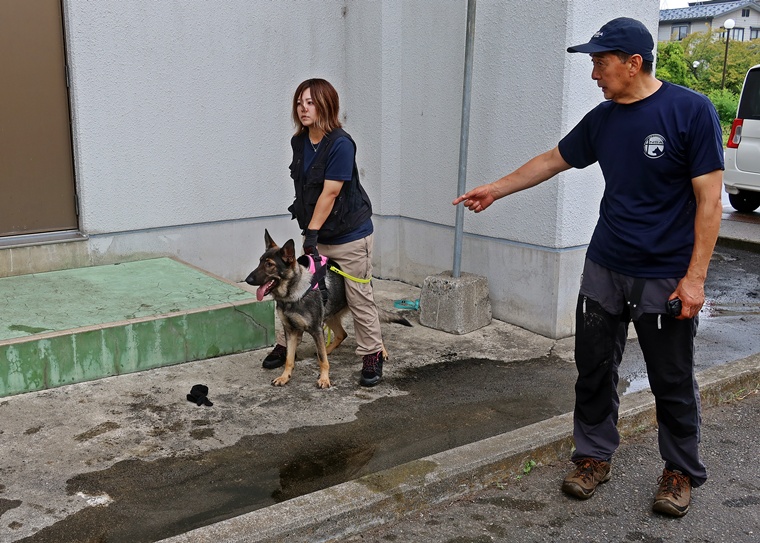
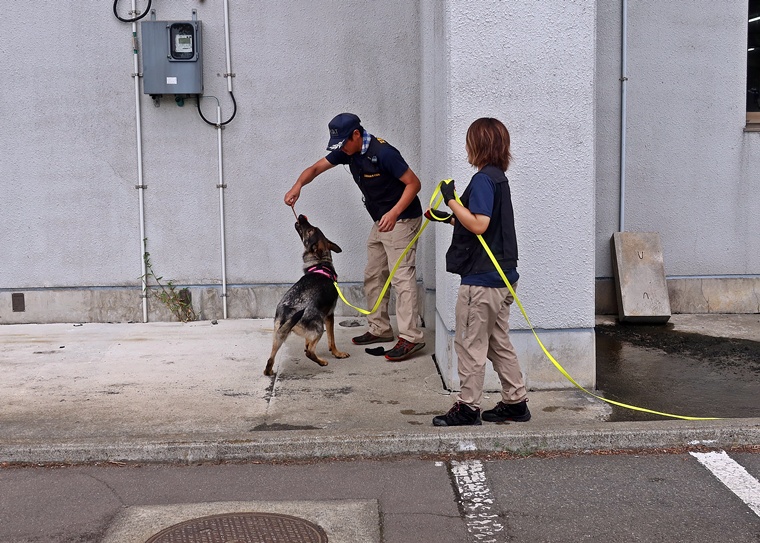
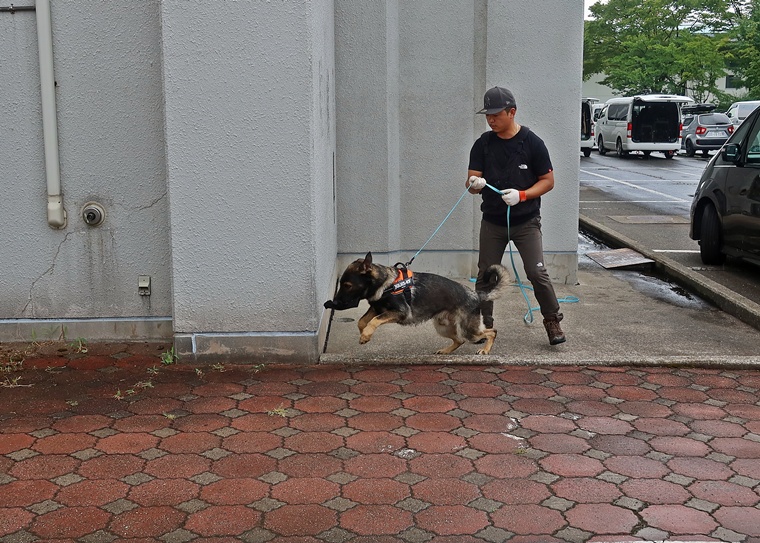
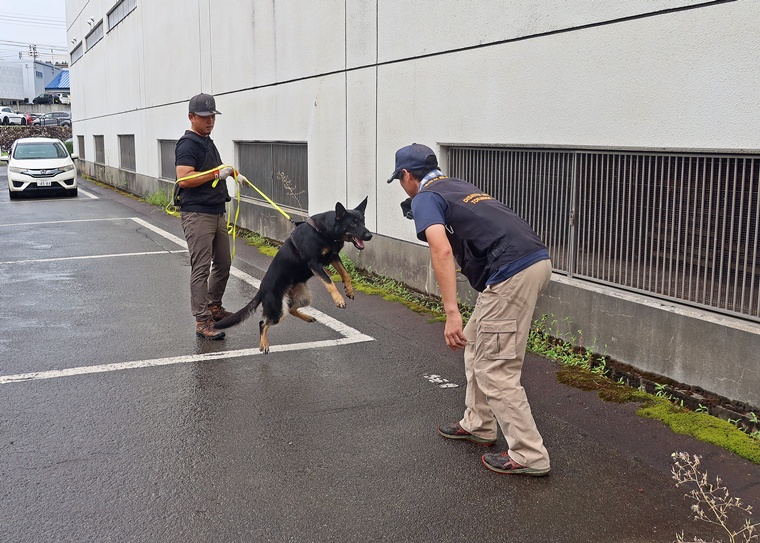
今回はその入口として、一頭一頭の理解度に合わせ、短くシンプルな設定から訓練を行いました。
距離や難易度を上げることを急ぐのではなく、まずは犬自身が「何を探しているのか」を確実に理解することを大切にして、今後の訓練につなげていきます。
As an introduction, we therefore began with short, simple exercises adapted to each dog’s current level of understanding.
Rather than rushing to increase distance or difficulty, the priority is first to ensure that the dog clearly understands what it is searching for. From that foundation, the training can be developed progressively.
2日間で共有したこと
Air Scent、HRD、Trailing。
捜索方法は異なりますが、その根底にあるものは共通しています。
What We Shared Over These Two Days
Air Scent, HRD, and Trailing are different search disciplines, but the principles underlying them have much in common:
犬を理解すること。
犬を観察すること。
犬が何を学習しているのかを考えること。
そして、犬から得られた情報を人が正しく判断すること。
Understand the dog.
Observe the dog.
Think about what the dog is actually learning.
And correctly interpret the information the dog provides.
今回の講習では、技術や方法を一方的に伝えるのではなく、それぞれの犬を実際に見ながら、「なぜこの行動が出たのか」「次はどのような設定にするべきなのか」を参加者と一緒に考えることを大切にしました。
今後は、指導者から与えられた訓練メニューを実施するだけではなく、ハンドラー同士が犬の状態や課題を共有し、自分たちで訓練目的と設定を考えられるチームへ成長していくことも重要になります。
Throughout this program, our goal was not simply to teach techniques or methods in a one-way manner.
Instead, we observed the individual dogs together with the participants and asked:
“Why did this behavior occur?”
“What should we change in the next training setup?”
Moving forward, it will also be important for the team to develop beyond simply carrying out training exercises provided by an instructor.
Handlers should be able to share observations and challenges within the team, define their own training objectives, and design appropriate training scenarios together.
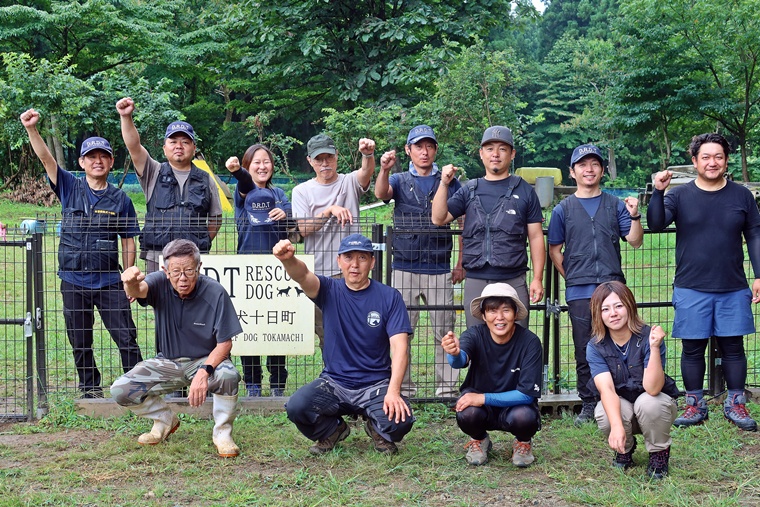
消防との連携、そして今後へ
今回の2日間で、私たちが大きな可能性を感じたことの一つが、消防関係者の皆様との連携です。
初日の講義には消防レスキュー職員の皆様にもご参加いただき、実際の捜索活動の記録を共有しながら、捜索犬にできること、そしてその能力を実際の捜索で活かすために必要なことについて、一緒に考える機会を持つことができました。
どれだけ高い能力を持つ犬とハンドラーを育成しても、遭難・行方不明事案が発生した際に、適切なタイミングで捜索現場へ投入されなければ、その能力を十分に活かすことはできません。
一方、捜索を指揮する側にとっても、Air Scent、Trailing、HRDなど、それぞれの捜索方法で「何ができるのか」「どのような場面で活用できるのか」を知ることは、捜索資源を適切に選択する上で重要になります。
だからこそ、犬を育成する側と、実際に捜索を担う消防等の関係機関が、平時から互いの能力や役割を理解しておくことが必要だと私たちは考えています。
今回、消防関係者の皆様から非常に協力的な姿勢をいただき、こうした考え方を共有できたことは、今後につながる大きな一歩となりました。
そして、このような民間の救助犬・捜索犬組織と消防等が連携できる環境が十日町にあることは、決して当たり前のことではありません。
長年にわたり、この関係と枠組みを築いてこられた災害救助犬十日町の高橋隊長をはじめ、関係者の皆様のご尽力に、改めて敬意と感謝を申し上げます。
今回の講習を一度限りのものとせず、今後もそれぞれの犬とハンドラーの育成を継続するとともに、Air Scent、Trailing、HRDそれぞれの特性を活かし、実際の遭難者・行方不明者捜索で活用できるチームづくりにつなげていきたいと考えています。
Collaboration with Fire & Rescue Services — Looking Ahead
One of the most significant possibilities we saw during these two days was the potential for continued collaboration with fire and rescue personnel.
Fire and rescue personnel participated in the first day’s lecture, giving us an opportunity to share records from actual search operations and discuss both what search dogs are capable of and what is required to effectively utilize those capabilities in real-world operations.
No matter how capable a dog-and-handler team becomes, those capabilities cannot be fully utilized if the team is not deployed at an appropriate stage when a wilderness or missing-person incident occurs.
At the same time, those responsible for managing a search need to understand what each search discipline can do and under what circumstances it can be effectively deployed, whether Air Scent, Trailing, HRD, or another search resource.
For this reason, we believe it is essential that those who train and develop search dogs and the public agencies responsible for actual search operations — including fire and rescue services — understand each other’s capabilities and roles before an incident occurs.
The highly cooperative and positive response from the fire and rescue personnel during this program allowed us to share this concept directly and represented an important step toward future collaboration.
The environment that exists in Tokamachi, where a volunteer search-and-rescue dog organization can work in cooperation with fire and other public agencies, should not be taken for granted.
We would therefore like to express our sincere respect and appreciation to Team Leader Takahashi of Disaster Search Dog Tokamachi, as well as everyone involved, for the many years of effort that have gone into building these relationships and this framework for cooperation.
We hope that this program will not be a one-time event. We intend to continue developing the individual dogs and handlers while building a team capable of applying the respective strengths of Air Scent, Trailing, and HRD to real-world wilderness and missing-person search operations.
訓練のための訓練ではなく、一人でも多くの要救助者・行方不明者を発見するために。
We do not train simply for the sake of training. We train to help find those who are missing and those in need of rescue.
NSAとしても、十日町の皆様とともに、今回の2日間で始まった取り組みを今後の実働につなげていきたいと思います。
NSA looks forward to continuing this work together with the Tokamachi team and turning what began during these two days into capabilities that can be effectively deployed in real-world search operations.
関連記事
-
 NPO法人 北東北捜索犬チーム Trailig/HRD Workshop_2026.10.04
 -
2026.11.03/NPO法人 北東北捜索犬チーム Trailing/HRD 適性試験
-
2026.10.25/ NSA (Trailig/HRD/Disaster)訓練会(相模原市内)
-
2026.10.11/ NSA (Trailig/HRD/Disaster)訓練会(相模原市内)
-
NSA Trailing/Disaster/HRD 訓練会レポート_2026.09.27
-
2026.10.10/REDOG MRT プレ試験
-
2026.10.04/NPO法人 北東北捜索犬チーム Trailing/HRD Workshopー終了しましたー
-
NSA Trailing/Disaster/HRD 訓練会レポート_2026.09.13