NSA Trailing/Disaster/HRD 訓練会レポート_2026.10.25
NSA Trailing/Disaster/HRD Training
2026年10月25日(日) NSA Trailing/Disaster/HRD・訓練会
朝の気温は16℃と涼しいスタートとなりましたが、台風30号の影響による暖かい南風が入り、時間の経過とともに気温と湿度が上昇し、季節外れの蒸し暑さとなりました。今回の訓練会は、AM6:00より市街地でのTrailing訓練を開始し、その後AM8:30から会場を資材置き場へ移動して、Disaster/HRD訓練を実施しました。
災害救助犬十日町からは6名・7頭が参加し、それぞれのUnitが現在抱えている課題の克服と能力向上を目指し、実践的なトレーニングに取り組みました。また、今回は法政大学市ヶ谷ボランティアセンター所属の学生団体「チーム・オレンジ」のメンバーから見学のご希望をいただき、Disaster/HRD訓練の様子をご覧いただきました。実際の訓練を通して、捜索犬の育成現場や、犬とハンドラーが一体となって取り組む捜索活動について知っていただく機会となりました。
Trailingでは、実際の市街地環境を活用し、それぞれのUnitの習熟度に応じたトレーニングを行いました。ビギナーのUnitについては、モチベーションランを中心に、Trailingの基礎となる捜索への意欲を高めながら、基本的な動きやハンドラーとの連携を確認しました。ステップアップしているUnitについては、犬の捜索能力を高めるだけでなく、捜索中に犬が示す様々な反応をハンドラーがどのように観察し、状況を判断してハンドリングにつなげるのかという点を重視しました。Trailingでは、犬の能力を引き出すハンドラーの観察力と判断力が重要になります。犬が示す反応を正確に読み取り、Unitとして適切な判断ができるよう、実際の市街地環境の中で経験を積み重ねました。
Disasterでは、初歩犬のバークアラートの導入とステップアップをはじめ、それぞれのUnitのレベルや現在の課題に合わせた設定でトレーニングを行いました。犬の捜索意欲や捜索能力、告知動作の精度を確認するとともに、ブラインド捜索では、ハンドラーの観察力や判断力、犬の反応に応じたハンドリングなど、Unitとしての総合的な能力が求められます。特に、ハンドラーが事前に捜索対象者の位置を把握していない状況では、犬が示す反応を根拠に状況を判断し、適切な捜索を組み立てることが重要です。今回も、それぞれのUnitが現在の課題を確認しながら、実際の災害現場で求められる捜索能力と連携の向上を目指したトレーニングを積み重ねることができました。
HRDでは、2カ所に設定したソースを対象に捜索を実施しました。環境条件の変化によって、ソースから形成されるセントコーンへの犬の反応がどのように変化するのかを確認するとともに、ソースへのアプローチやTFRの実行性についても検証しました。HRDでは、犬が示すわずかな反応をハンドラーが見逃さず、適切に判断することが重要です。今回の捜索でも、環境によるセントコーンの変化を踏まえながら、犬の反応とハンドラーの対応を確認する機会となりました。
NSA Trailing / Disaster Search / HRD Training Session
Sunday, October 25, 2026
The morning began with a cool temperature of 16°C. However, warm southerly winds associated with Typhoon No. 30 brought rising temperatures and humidity as the day progressed, resulting in unusually warm and humid conditions for the season.
The training session began at 6:00 a.m. with Trailing exercises in an urban environment. At 8:30 a.m., the training moved to a materials storage yard, where Disaster Search and Human Remains Detection (HRD) exercises were conducted.Six members and seven dogs from the Tokamachi Disaster Rescue Dog Team participated in the session. Each dog-handler unit engaged in practical training aimed at addressing its current challenges and further developing its capabilities.We also welcomed members of Team Orange, a student organization affiliated with the Hosei University Ichigaya Volunteer Center, who had expressed an interest in observing the Disaster Search and HRD training.By observing the exercises firsthand, the students had an opportunity to learn about how search dogs are trained and how dogs and handlers work together as coordinated units during search operations.
Trailing exercises were conducted in a real urban environment, with training scenarios tailored to the experience and proficiency level of each unit.For beginner units, the emphasis was on motivation runs, designed to build the dogs’ enthusiasm for searching while reinforcing fundamental trailing behaviors and coordination between dog and handler.
For more advanced units, the focus extended beyond developing the dogs’ search capabilities. Particular attention was given to how handlers observed and interpreted the various responses displayed by their dogs during a search, assessed the developing situation, and translated those observations into appropriate handling decisions.In Trailing, the handler’s observation and decision-making skills are essential to making effective use of the dog’s capabilities.Through practical exercises in an urban environment, the units gained further experience in accurately interpreting their dogs’ responses and making appropriate decisions as coordinated dog-handler teams.
Disaster Search training included the introduction and progressive development of bark alerts for beginner dogs, along with exercises tailored to the experience level and current training needs of each unit.
The exercises provided opportunities to assess the dogs’ search motivation, search capabilities, and the accuracy and consistency of their bark alerts.Blind search exercises, in particular, required a combination of handler observation, sound decision-making, and appropriate handling based on the dog’s responses, bringing together the overall capabilities of the dog-handler unit.When the handler does not know the location of the concealed person in advance, it is especially important to interpret the dog’s responses as the basis for assessing the situation and developing an appropriate search strategy.Throughout the session, each unit worked on its current challenges while continuing to develop the search capabilities and coordination required for effective operations in real-world disaster environments.
HRD training involved searching for two odor sources placed at separate locations.The exercises focused on observing how the dogs’ responses to the scent cones formed by the sources changed under varying environmental conditions. The units also evaluated how the dogs approached the sources and the reliability of their Trained Final Responses (TFRs).In HRD work, it is essential for handlers to recognize even subtle changes in their dogs’ behavior and interpret those responses accurately.This session provided another opportunity to examine both the dogs’ responses and the handlers’ decisions and actions, while taking into account how environmental conditions influenced the formation and movement of scent cones.
Unitとしての能力向上を目指して
捜索犬の育成では、犬の捜索能力や告知動作を高めることはもちろんですが、それだけで実際の捜索活動に対応できるわけではありません。犬が示す反応をハンドラーが正確に観察し、その情報を基に状況を判断し、適切なハンドリングにつなげること。 この一連の連携が、Unitとしての捜索能力を支える重要な要素となります。今後も継続的な訓練を通じて、それぞれのUnitが抱える課題を明確にし、一つひとつ改善を積み重ねながら、実際の捜索現場で求められる能力の向上につなげていきたいと思います。
また、今回のような訓練会や日々の活動を継続して発信することで、捜索犬がどのような訓練を積み重ねて育成されているのか、そして行方不明者や遭難者の捜索活動において、どのような社会的役割を担っているのかを、より多くの皆様に知っていただけるよう取り組んでまいります。
In developing search dogs, improving their search capabilities and alert behavior is essential. However, these abilities alone are not sufficient for effective performance in real-world search operations.Handlers must accurately observe and interpret their dogs’ responses, assess the situation based on those observations, and make appropriate handling decisions. This coordinated process is an important foundation of the overall search capability of a dog-handler unit.Through continued training, we aim to identify the specific challenges faced by each unit and address them step by step, steadily developing the capabilities required in actual search operations.In addition, by continuing to share reports on training sessions such as this one and our regular activities, we hope to help more people understand how search dogs are developed through ongoing training, as well as the role they play in society through search operations for missing persons and people who become lost or stranded.
Trailing
モチベーションラン
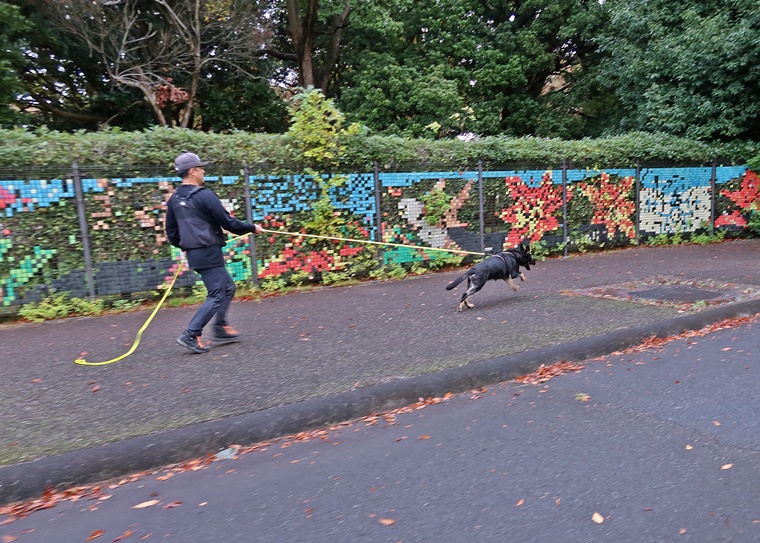
Trailingでは、ビギナーのUnitを対象に、基礎となるモチベーションランを中心としたトレーニングを行いました。今回は、普段とは異なるヘルパーを設定し、ヘルパーが変わった場合でも捜索への意欲を維持し、対象者をシッカリと追っていけるかを確認しました。Trailingを始めた当初と比較すると、犬自身がモチベーションランの流れや目的を少しずつ理解し、積極的に捜索へ取り組めるようになってきています。また、ハンドラーについても、単に犬を追従させるのではなく、モチベーションランを行う目的や、捜索中の犬のどのような反応を観察し、判断する必要があるのかについて、理解が深まってきています。1本目の捜索と比較して、後半になるほど犬の動きやハンドラーとの連携が安定し、Unitとしての成長を感じられる場面も見られました。
Trailing – Motivation Runs for Beginner Units
For beginner units, Trailing training focused primarily on fundamental motivation runs.This time, we introduced helpers who were different from those normally used in training to assess whether the dogs could maintain their motivation to search and continue following the designated person even when working with an unfamiliar helper.Compared with when they first began Trailing training, the dogs are gradually developing a better understanding of the sequence and purpose of motivation runs and are becoming more willing to engage actively in the search.The handlers are also developing a deeper understanding of the purpose of motivation runs. Rather than simply following their dogs, they are learning which behavioral responses to observe during the search, how to interpret those responses, and how to use that information to make appropriate handling decisions.As the training progressed, improvements were observed in both the dogs’ search behavior and their coordination with their handlers. Compared with the first run, their performance became more consistent during the later exercises, providing encouraging signs of development within each dog-handler unit.
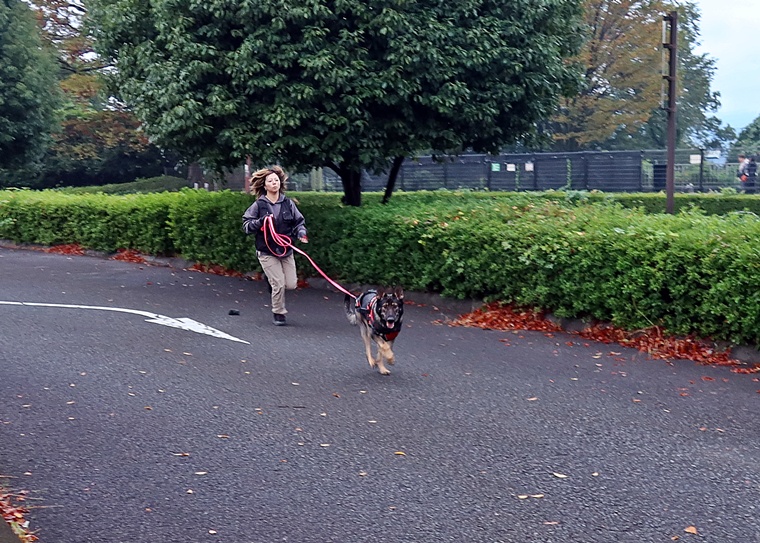
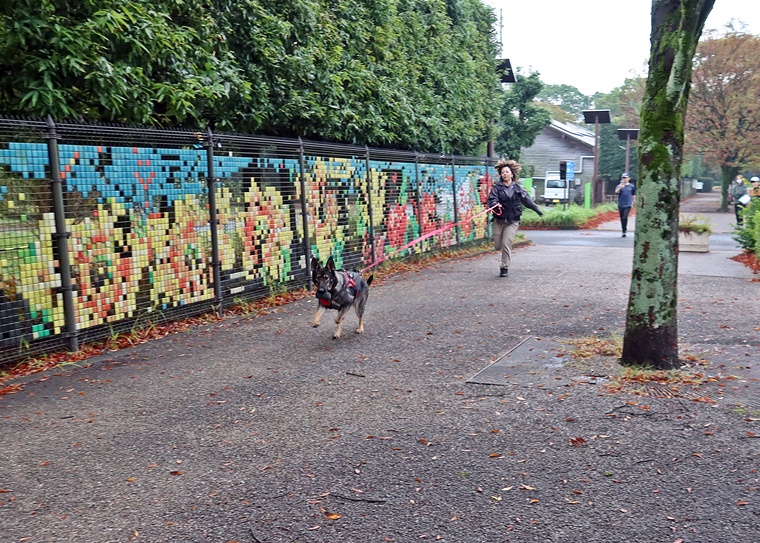
また、基礎となるモチベーションランから一段階ステップアップし、屈折や距離の延長、環境刺激などを取り入れた捜索設定にもチャレンジできる段階になってきています。今後も、モチベーションランによって培ってきた捜索への意欲を大切にしながら、犬の反応を正確に観察するハンドラーのスキルも並行して高め、Unitとして確実にステップアップできるように、一つひとつのトレーニングを丁寧に積み重ねていきます。
The beginner units are also reaching a stage where they can begin progressing beyond basic motivation runs and take on more challenging trailing exercises incorporating changes in direction, increased trail distances, and environmental distractions.
Moving forward, we will continue to build on the search motivation developed through motivation runs, while also strengthening the handlers’ ability to accurately observe and interpret their dogs’ responses.
By approaching each training exercise carefully and progressively, we aim to ensure that both dogs and handlers continue to develop together, allowing each unit to advance steadily to the next stage of training.
セントアーティクルトレーニング
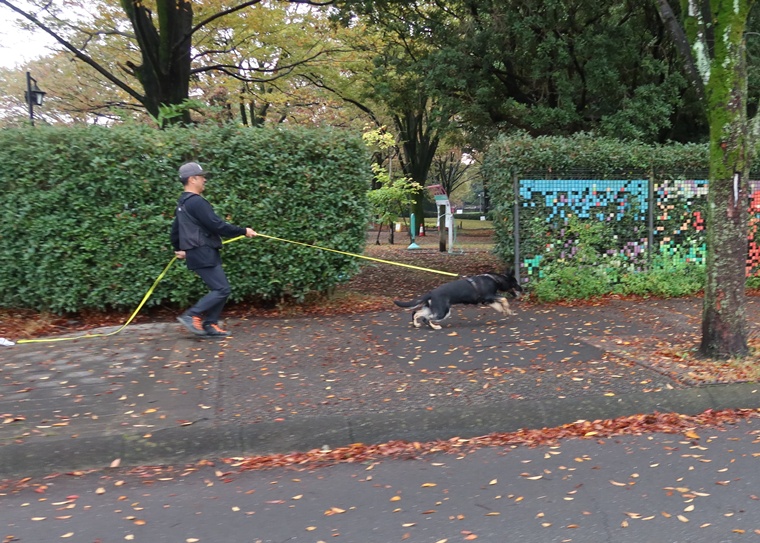
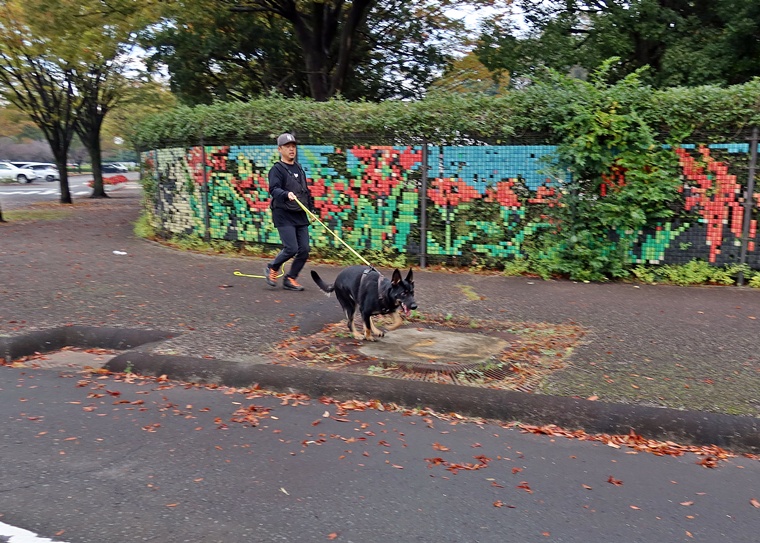
ヘルパーの臭いが付着したScent Article(セントアーティクル)を使用し、犬が捜索対象者の臭いを識別したうえで、その臭跡を追って捜索を開始するトレーニングへとステップアップしていきます。この段階では、単に臭跡を追うだけではなく、Scent Articleから対象臭を認識し、その臭いと臭跡を関連付けて捜索を開始するという、一連の流れを犬自身がシッカリと理解することが重要になります。そのため、それぞれのUnitの習熟度に合わせながら、段階的にトレーニングを進めていきます。
Training will progress to the use of scent articles carrying the helper’s scent, with the aim of teaching the dogs to identify the target person’s scent from the scent article and then initiate a search by following the corresponding scent trail.
At this stage, it is essential for the dogs to develop a clear understanding of the entire process: recognizing the target odor from the scent article, associating it with the corresponding scent trail, and initiating the search based on that association, rather than simply following a scent trail.
Training will therefore be introduced progressively, with each exercise tailored to the proficiency and development of the individual dog-handler unit.
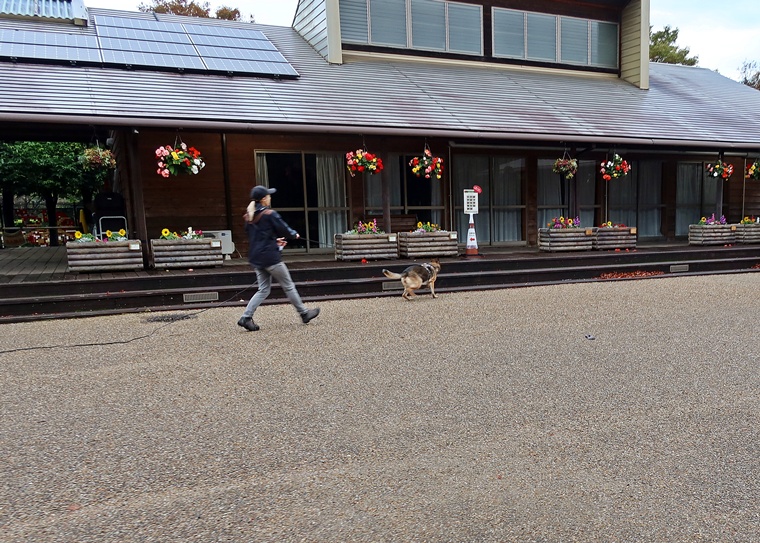
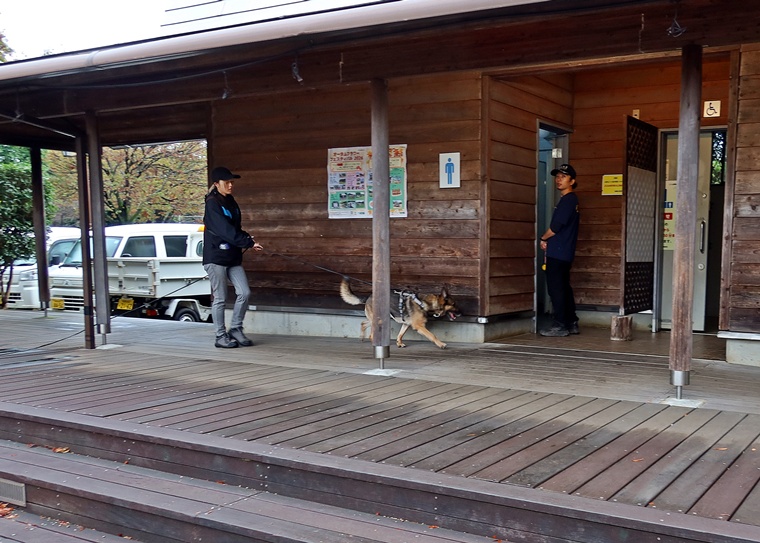
また、トレールの距離や屈折、アスファルトや土などの路面状況、周囲の環境刺激など、条件を一つずつ変化させながら経験を積み重ねていきます。ここで大切なのは、単に捜索の難易度を上げることではありません。条件が変化した際に犬がどのような反応を示すのかをハンドラーが正確に観察し、その反応をどのように判断してハンドリングにつなげるのかという、Unitとしての能力を高めることです。
We will also continue to build experience by gradually varying individual training conditions, including trail distance, changes in direction, surface types such as asphalt and soil, and environmental distractions.
The key objective is not simply to increase the difficulty of the search exercises. Rather, it is to develop the overall capabilities of the dog-handler unit by strengthening the handler’s ability to accurately observe how the dog responds to changing conditions, interpret those responses, and translate that information into appropriate handling decisions.
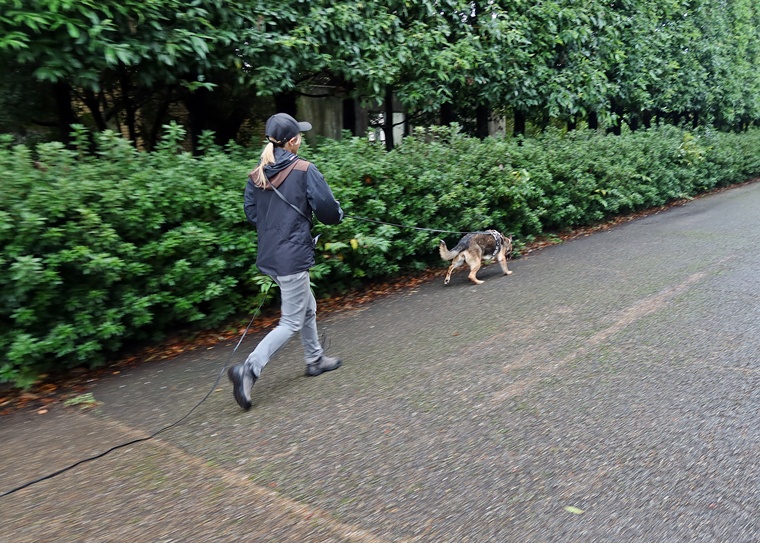
特に、犬が立ち止まったり、特定の場所に強い関心を示したりした際には、周囲の誘惑刺激に対する反応なのか、それとも対象者の臭跡に関連するセントプールへの反応なのかを、ハンドラーが見極める必要があります。この判断が曖昧なままでは、犬の反応を正しく捉えることができず、捜索の方向性やハンドリングにも影響します。犬の動きだけを追うのではなく、その反応が何を意味しているのかを考え、状況に応じた判断ができることも、このレベルから求められる重要なスキルです。今後も、犬の捜索能力とハンドラーの観察力・判断力を並行して高めながら、Scent Articleを起点とした、より実践的なTrailingへとつなげていきます。
In particular, when a dog stops or shows a strong interest in a specific location, the handler must be able to determine whether the behavior is a response to environmental distractions or to a scent pool associated with the target person’s scent trail.
If the handler cannot clearly distinguish between these possibilities, the dog’s responses may be misinterpreted, potentially affecting both the direction of the search and subsequent handling decisions.
At this stage of training, it is no longer sufficient for handlers simply to follow their dogs’ movements. They must also develop the ability to consider what each behavioral response may indicate, interpret it in the context of the search environment, and make appropriate decisions based on the situation.
We will continue to develop the dogs’ search capabilities alongside the handlers’ observation and decision-making skills, progressively advancing toward more practical Trailing exercises in which the search is initiated using a scent article.
ブラインドトレール
アドバンスクラスのUnitでは、ブラインドトレールを実施し、現在の課題となっている「犬が示すネガティブ反応をハンドラーが正確に読み取る技術」の向上をテーマにトレーニングを行いました。前回の訓練と比較すると、犬が示すネガティブ反応をハンドラーがより明確に読み取れるようになってきており、Unitとしての成長が感じられました。一方で、その反応を確認した後に、どのような判断を行い、ハンドリングにつなげていくのかという点については、更に精度を高めていく必要があります。
捜索中に犬が示すネガティブ反応は、「臭跡が存在しない」「臭跡を見失った」「進行方向が異なる」など、捜索を進めるうえで重要な情報をハンドラーに伝えるサインです。これらの反応を見逃さず、正確に読み取ることが、適切な判断とハンドリングにつながります。
For the advanced units, blind trails were conducted with a particular focus on improving the handlers’ ability to accurately recognize and interpret their dogs’ negative responses, which remains a key area for development.
Compared with the previous training session, the handlers showed improvement in their ability to identify these negative responses more clearly, indicating progress in the overall development of the dog-handler units. However, further refinement is still needed in determining what decisions to make after recognizing a negative response and how to translate those decisions into appropriate handling.
During Trailing, a dog’s negative responses can provide the handler with important information, potentially indicating that the target scent trail is not present in a particular area, that the dog has lost the trail, or that the current direction of travel is incorrect.
Recognizing these responses without overlooking them, and interpreting them accurately, is essential for making sound decisions and applying appropriate handling techniques throughout the search.
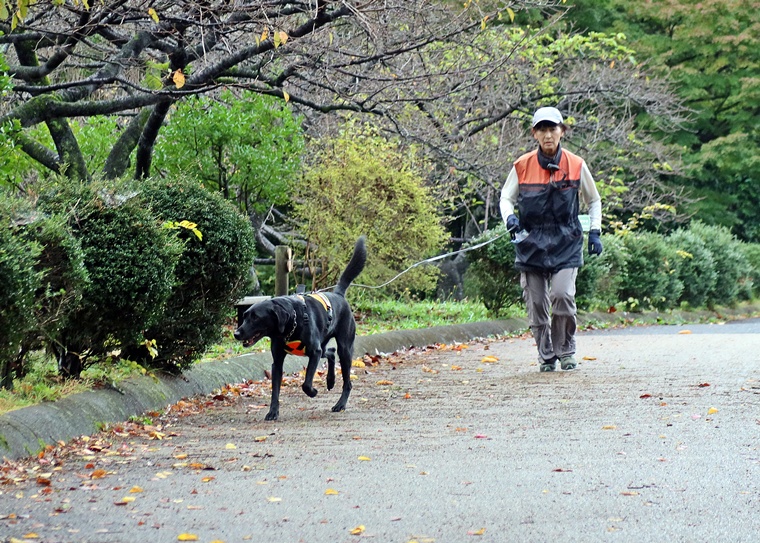
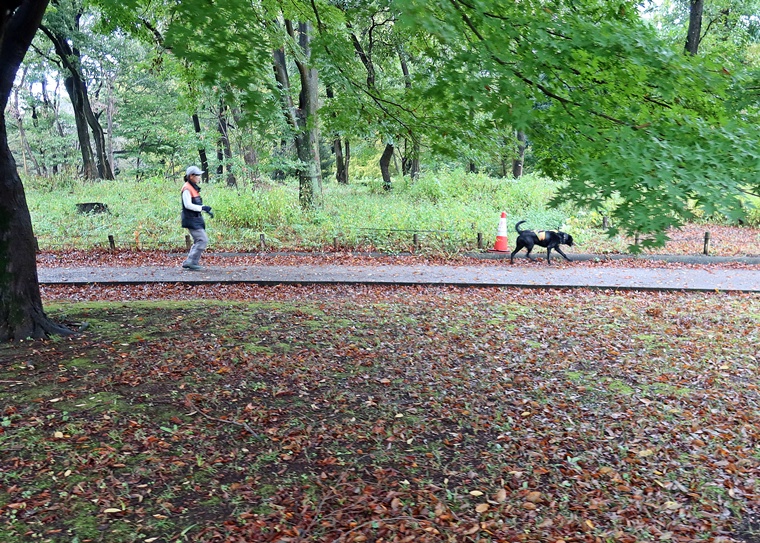
また、状況によっては捜索スピードをコントロールしながら、正しい臭跡方向を確定させるためのキャスティングも必要不可欠となります。犬の反応を確認するだけでなく、その反応を根拠として次の捜索行動を組み立てられることが、アドバンスクラスのUnitには求められます。特に、臭跡が拡散しやすく、臭気が複雑に流動する交差点などでは、それぞれのUnitの習熟度に応じた課題を設定し、犬の行動変化を観察しながら進行方向を判断する実践的なトレーニングを行いました。Trailingでは、必ずしも対象者が実際に歩いた線上だけを犬が追うわけではありません。路面状況や風などの環境条件によって臭気は移動・拡散するため、犬がその臭気をどのように捉え、どのような反応を示しているのかを理解することが重要です。犬の反応を信頼することと、その反応を正確に判断することは、どちらも欠かすことのできない技術です。 今後も、ネガティブ反応の読み取りとキャスティングの精度を高めながら、犬の捜索能力を最大限に活かせるハンドリングを目指し、より実践的なTrailingにつなげていきます。
Depending on the situation, it is also essential to control the pace of the search and use casting techniques to establish the correct direction of the scent trail.
Advanced units are expected not only to recognize their dogs’ responses, but also to use those responses as the basis for determining the next steps in the search.
At intersections and other locations where scent may disperse and move in complex patterns, practical training exercises were tailored to the proficiency level of each unit. The focus was on observing changes in the dogs’ behavior and using those observations to determine the appropriate direction of travel.
In Trailing, dogs do not necessarily follow the exact route walked by the target person. Environmental conditions, including surface types and wind, can cause scent to shift or disperse away from the original trail route. It is therefore important for handlers to understand how their dogs detect and respond to scent under these conditions.
Trusting the dog’s responses and accurately interpreting those responses are equally essential skills.
We will continue to improve the accuracy of negative-response interpretation and casting techniques, while developing handling skills that allow each dog-handler unit to make the most effective use of the dog’s search capabilities and progress toward more practical Trailing exercises.
Disaster
Disasterでは、資材置き場の環境を活用し、それぞれのUnitの習熟度や現在の課題に応じたトレーニングを実施しました。初歩段階のUnitについては、ヘルパーを発見した際のバークアラートの強化をはじめ、短い距離でのランナウェイからバークアラートへ移行する一連の動きや、バークアラートを持続させるためのトレーニングに取り組みました。
また、遮蔽された空間にいるヘルパーに対するバークアラート、ヘルパーへの執着や捜索意欲の向上、限定されたエリアでの初歩的な捜索など、それぞれのUnitに必要な課題を設定し、段階的にトレーニングを進めました。
特に、ヘルパーを直接視認できない状況や、障害物を乗り越えなければヘルパーに到達できない設定では、視覚的な情報だけに頼らず、臭いを捉えてヘルパーの位置を特定し、確実なバークアラートへと移行できることが重要になります。単にヘルパーへの意欲を高めるだけではなく、その高いモチベーションを実際の捜索行動につなげ、発見から告知までの一連の動きを犬自身がシッカリと理解できるよう、それぞれの習熟度に合わせてトレーニングを積み重ねました。アドバンスクラスのUnitでは、犬の捜索能力やバークアラートの実行性だけでなく、捜索中に犬が示す反応に対するハンドラーの観察力・判断力、状況に応じたハンドリング、犬との連携など、Unitとしての総合的な能力を確認しました。犬が持つ捜索能力を実際の現場で発揮させるためには、ハンドラーが犬の反応を正確に読み取り、適切な判断とハンドリングにつなげることが欠かせません。
今回の訓練を通して、それぞれのUnitが現在できていることと、今後更に強化すべき課題を確認することができました。引き続き、基礎となる捜索意欲や告知動作の精度を高めながら、実際の災害現場を想定した捜索能力とUnitとしての連携の向上を目指していきます。
Disaster Search training was conducted in a materials storage yard, with exercises tailored to the proficiency level and current training needs of each dog-handler unit.
For beginner units, the focus included strengthening the bark alert upon locating the helper, developing the sequence from short-distance runaway exercises into a bark alert, and improving the dogs’ ability to maintain a clear and sustained bark alert.
Training was also conducted on bark alerts directed toward helpers concealed within enclosed or obstructed spaces, developing sustained engagement with the helper and search motivation, and introducing basic searches within defined areas. Each exercise was designed to address the specific needs of the individual unit, with training progressing gradually according to its level of development.
In particular, when the helper was not directly visible or when the dog had to negotiate obstacles to reach the helper, it was important for the dog to rely on scent rather than visual information alone, accurately locate the helper, and transition into a reliable bark alert.
The objective was not simply to increase the dog’s motivation to reach the helper, but to channel that motivation into effective search behavior. Training therefore emphasized helping each dog develop a clear understanding of the complete sequence, from searching for and locating the helper to delivering a sustained bark alert.
These exercises were repeated and progressively developed according to each unit’s proficiency level.
For advanced units, the training focused not only on the dogs’ search capabilities and the reliability of their bark alerts, but also on the overall performance of the dog-handler unit. This included the handlers’ ability to observe and interpret their dogs’ responses during a search, make appropriate decisions, adapt their handling to the situation, and maintain effective coordination with their dogs.
To make effective use of a dog’s search capabilities under real-world operational conditions, it is essential for the handler to accurately recognize and interpret the dog’s responses and translate those observations into sound decisions and appropriate handling.
Through this training session, each unit was able to identify both the skills it had already developed and the areas requiring further improvement.
We will continue to strengthen the foundations of search motivation and the accuracy and consistency of bark alerts, while further developing the search capabilities and dog-handler coordination required for effective operations in real-world disaster environments.
バークアラートとランナウェイ
バークアラートがまだ完成していないビギナーのUnitでは、明確なひと声がなかなか出ない状況が続いていますが、吠えようとする行動そのものはシッカリと表現できるようになってきています。バークアラートの完成までは、もう一息という段階ですので、現在の反応を大切にしながら、確実な発声へとつなげていきたいと思います。また、ランナウェイでは、ヘルパーを捜索することへの意欲や、発見後のヘルパーへの執着が不安定なUnitについて、それぞれの課題に応じた基礎トレーニングを行いました。
For beginner units whose bark alerts are not yet fully established, producing a clear, audible bark remains a challenge. However, the dogs are increasingly showing clear behavioral signs of attempting to bark.
They are approaching the stage where a reliable bark alert can be established. We will continue to build on these developing responses, carefully reinforcing them to encourage clear and consistent vocalization.
During runaway exercises, we also conducted foundational training tailored to the specific needs of units that were still showing inconsistent motivation to search for the helper or difficulty maintaining sustained engagement with the helper after locating them.
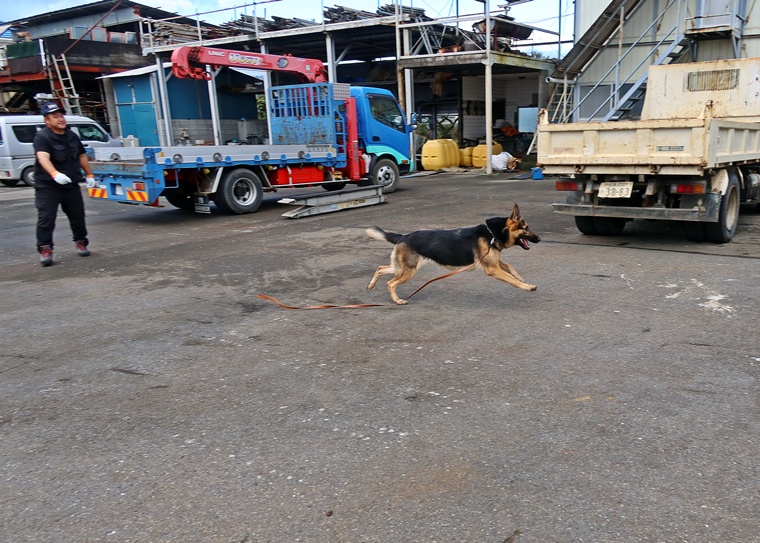
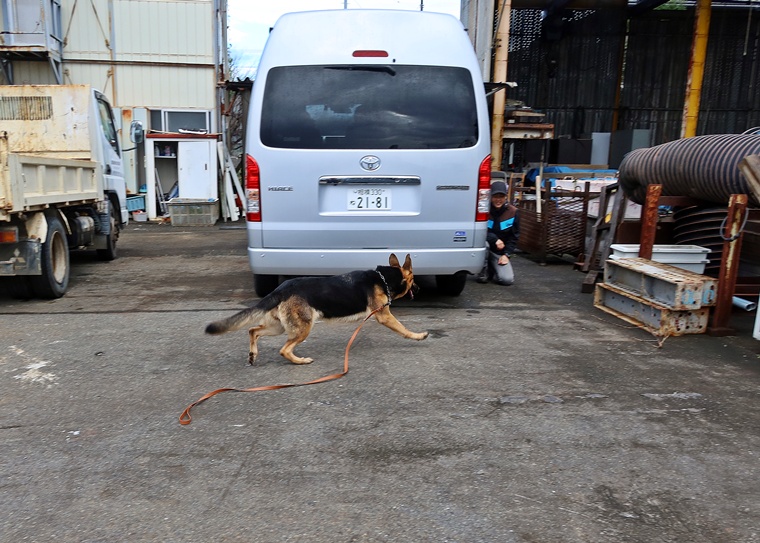
ヘルパーを発見してもバークアラートまで確実に移行できなかったり、告知の途中でヘルパーから離脱してしまったりする場面も見られましたが、このような段階では、単に吠えることだけを求めても、安定したバークアラートにはつながりません。まずは、犬にとってヘルパーそのものの価値を高め、捜索して発見することへの意欲と、発見後もヘルパーに対する意識を持続させることが重要になります。そのうえで、ヘルパーへの高いモチベーションをバークアラートへとつなげ、告知動作の持続と安定性を高めていく必要があります。
There were instances where dogs located the helper but did not reliably transition into a bark alert, or disengaged from the helper before completing the alert.
At this stage of training, however, simply encouraging the dog to bark is not sufficient to establish a reliable and consistent bark alert.
The first priority is to increase the value of the helper as a reward for the dog, strengthening the dog’s motivation to search for and locate the helper while also developing its ability to maintain sustained engagement with the helper after the find.
Once this foundation is established, the dog’s strong motivation toward the helper can be progressively channeled into a bark alert, with continued training focused on improving the duration, consistency, and reliability of the alert behavior.
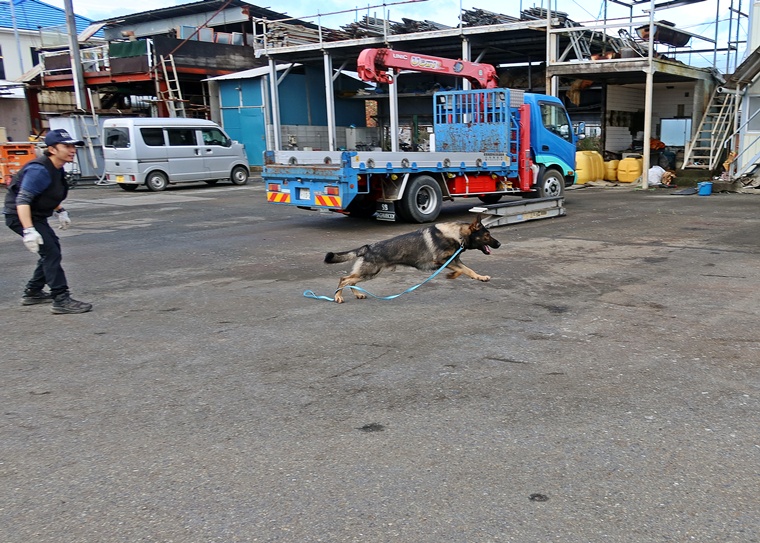
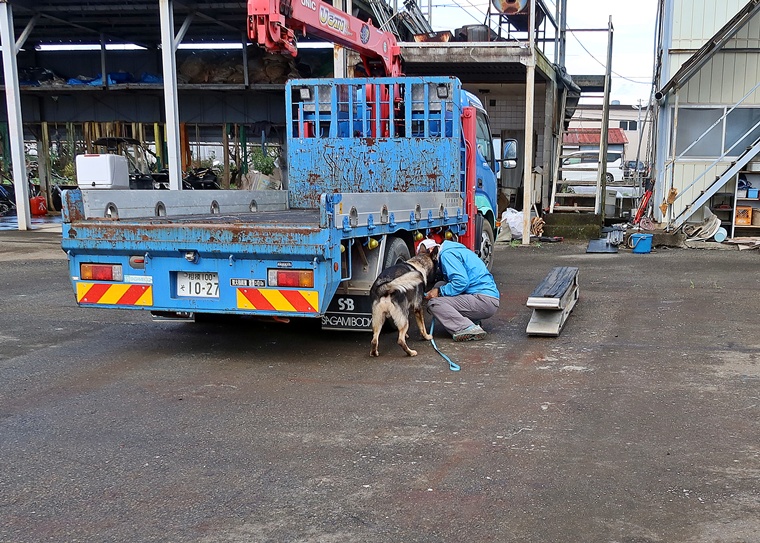
それぞれのUnitによって、捜索への意欲、ヘルパーへの執着、バークアラートの理解度には違いがありますので、現在どの部分ができていて、どの部分が不足しているのかを細かく確認しながら、段階的にトレーニングを進めました。今後も、ヘルパーを捜索する意欲、発見後の執着、確実なバークアラートという一連の流れを犬自身がシッカリと理解できるよう、それぞれのUnitの習熟度に合わせた基礎トレーニングを積み重ね、安定した捜索と告知動作の完成を目指していきます。
Each dog-handler unit differs in its level of search motivation, sustained engagement with the helper, and understanding of the bark alert behavior. Training was therefore conducted progressively, with careful attention to identifying which elements of the search and alert sequence were already developing well and which still required further reinforcement.
Moving forward, we will continue to provide foundational training tailored to the proficiency level of each unit, helping the dogs develop a clear understanding of the complete sequence: maintaining motivation to search for the helper, remaining engaged with the helper after locating them, and delivering a reliable and sustained bark alert.Through this progressive approach, we aim to establish greater consistency in both search performance and alert behavior.
限定エリアでの捜索
ヘルパーに対する意欲や執着が安定しているUnitについては、現在の捜索能力や習熟度に合わせ、無理のない範囲でエリア捜索のトレーニングを行いました。捜索中にセントコーンを捉えた際の犬の反応や、その臭気を追ってヘルパーの位置を特定し、到達するまでの一連の動きを確認するとともに、ヘルパー発見後に確実なバークアラートへ移行できるかについても確認しました。また、ヘルパーを直接視認できない遮蔽空間を設定し、視覚的な情報に頼らず、セントコーンを捉えてヘルパーの位置を特定し、対象を視認できない状況でも安定したバークアラートを持続できることを目的とした強化トレーニングにも取り組みました。
For units demonstrating consistent motivation and sustained engagement with the helper, we introduced area search exercises within a manageable level of difficulty, tailored to each unit’s current search capabilities and proficiency.
The exercises focused on observing how the dogs responded when encountering a scent cone, how they worked the odor to its source to locate and reach the helper, and whether they could reliably transition into a bark alert after locating the helper.
Additional reinforcement training was conducted using concealed spaces where the helper was not directly visible. These exercises were designed to develop the dogs’ ability to detect and follow the scent cone, accurately locate the helper without relying on visual cues, and maintain a clear and sustained bark alert even when the helper remained out of sight.
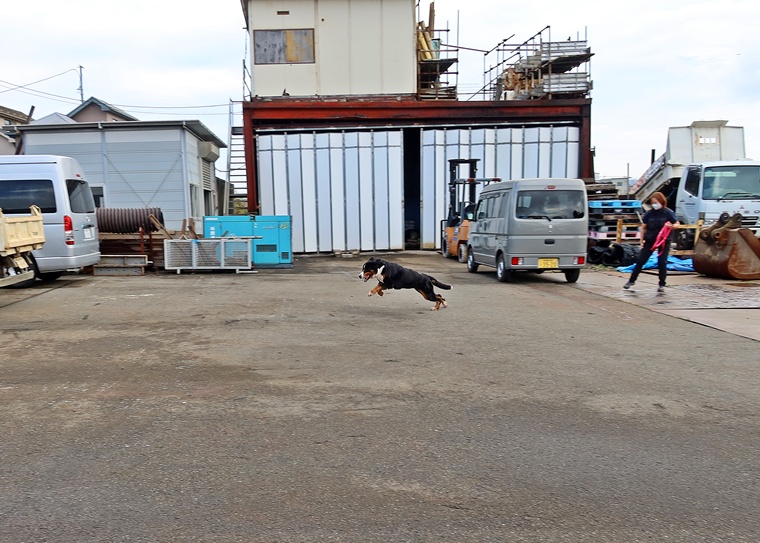
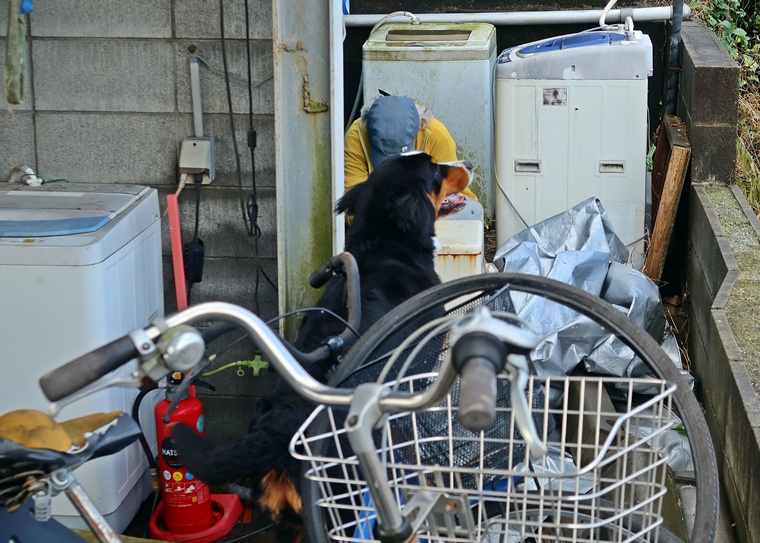
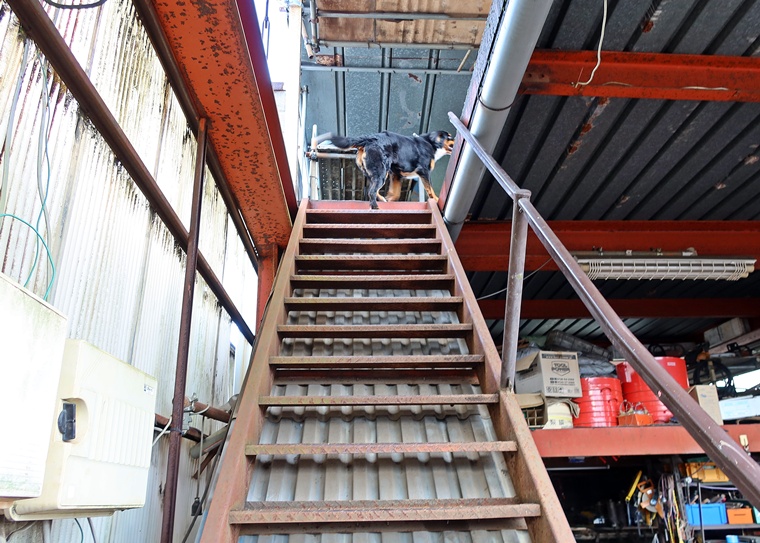
この段階では、単に捜索エリアを広げたり、設定の難易度を高めたりすることが目的ではありません。セントコーンへの反応からヘルパーの位置の特定、そして確実なバークアラートへと移行する一連の流れを、犬自身がシッカリと理解し、安定して実行できることが重要になります。更に今回は、障害物を乗り越えてヘルパーの元へ到達する設定や、これまで経験したことのない高さのある場所へのアプローチにもチャレンジしました。地上から階段を上り、高い位置にいるヘルパーの元へ到達するなど、これまでとは異なる環境条件の中で、新たな経験を積み重ねることができました。
At this stage, the objective is not simply to expand the search area or increase the difficulty of the exercises. What matters is that the dog develops a clear understanding of the entire sequence—from responding to a scent cone and accurately locating the helper to delivering a reliable bark alert—and can perform these behaviors consistently.
During this session, the dogs also took on new challenges involving negotiating obstacles to reach the helper and approaching elevated locations at heights they had not previously encountered.
These exercises included climbing stairs from ground level to reach a helper positioned at an elevated location, providing the dogs with valuable opportunities to gain experience under environmental conditions different from those encountered in their previous training.
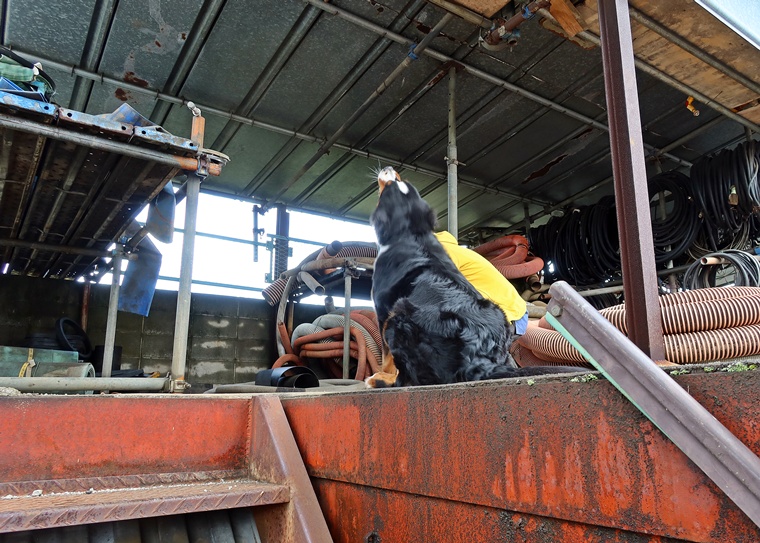
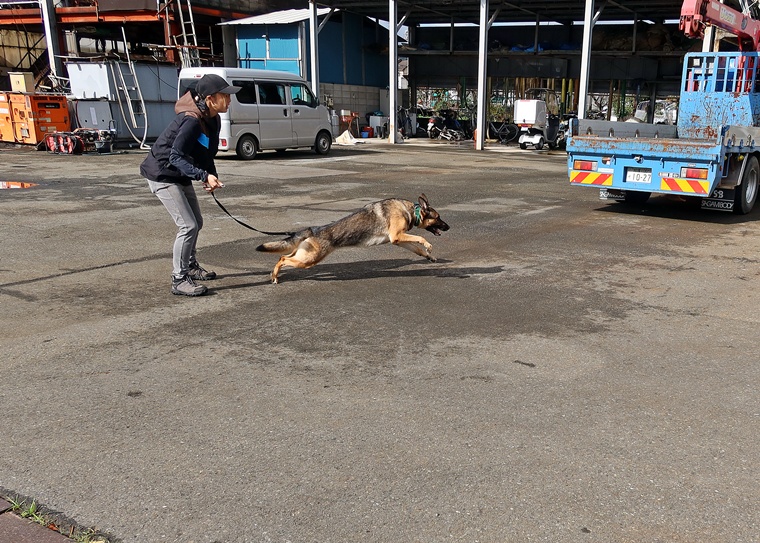
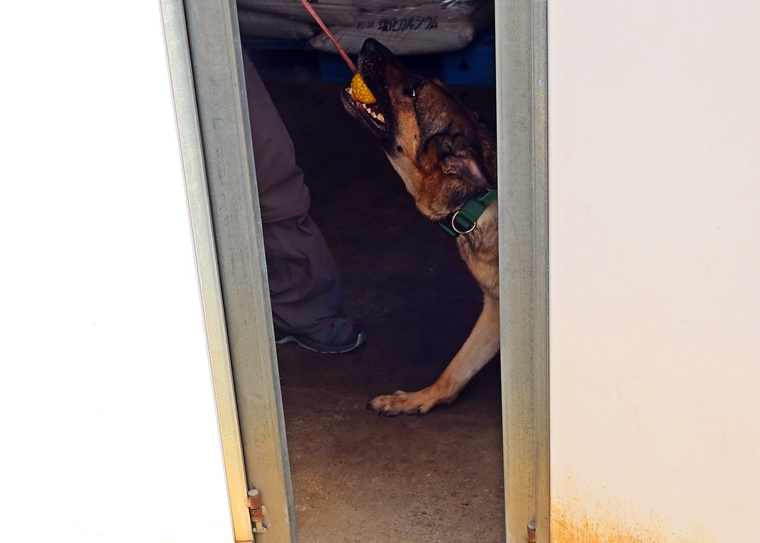
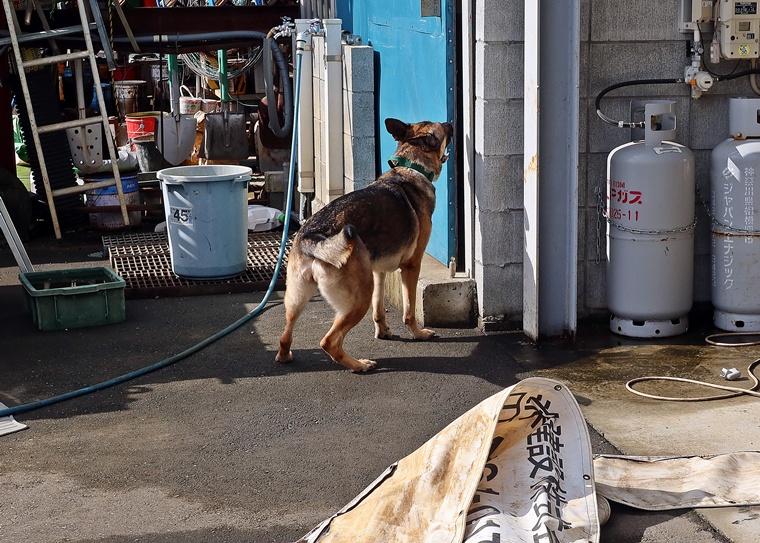
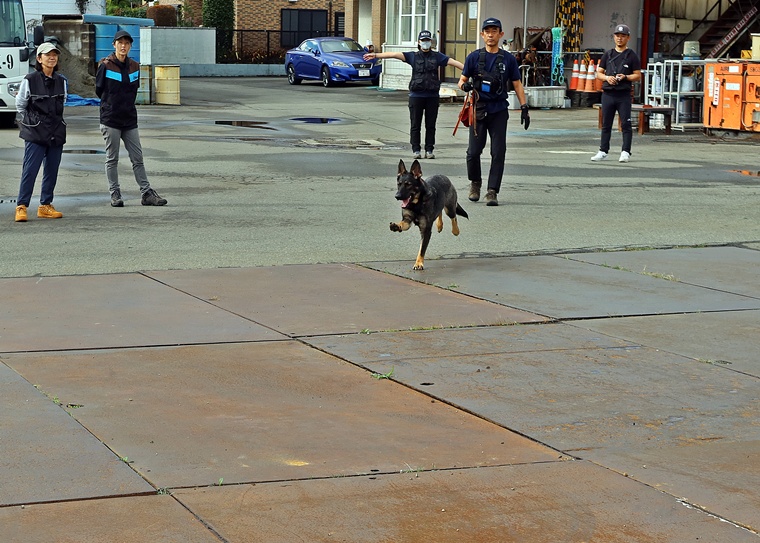
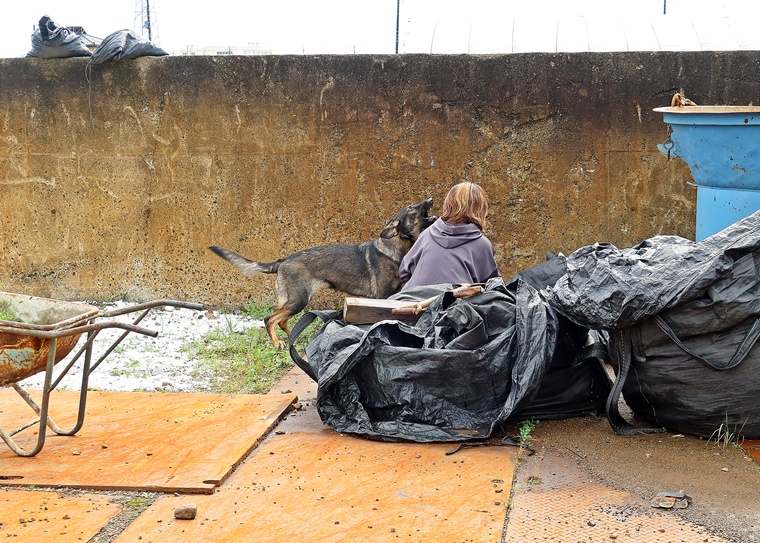
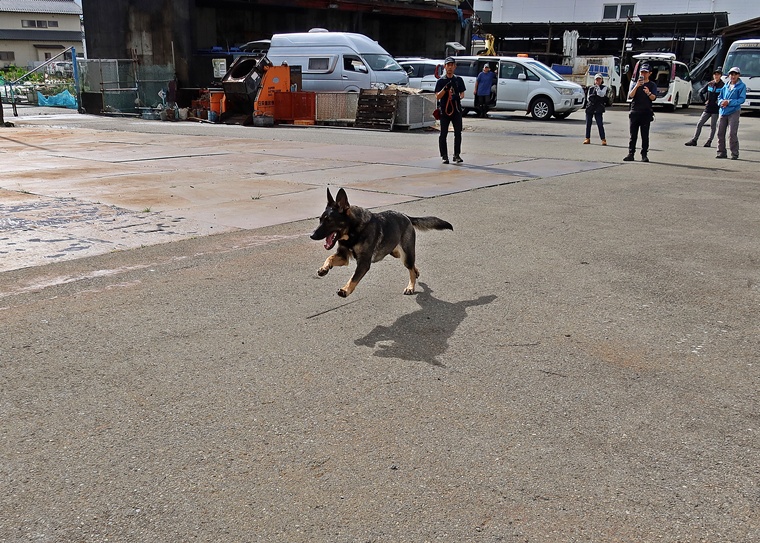
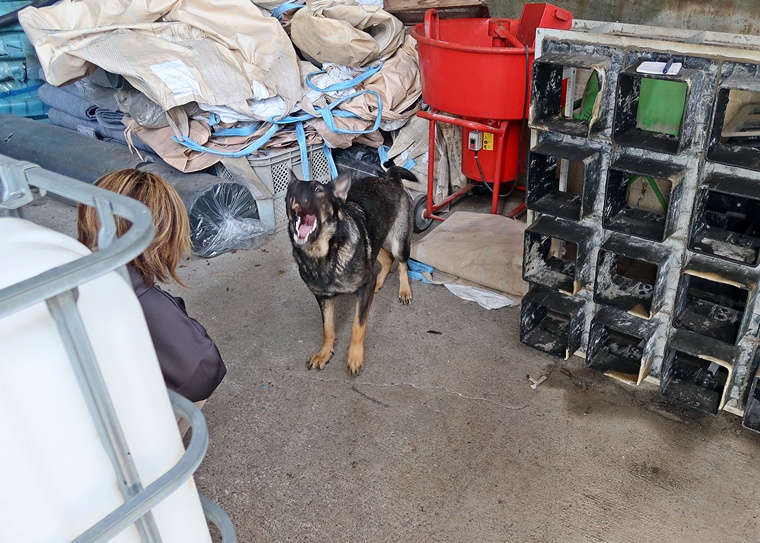
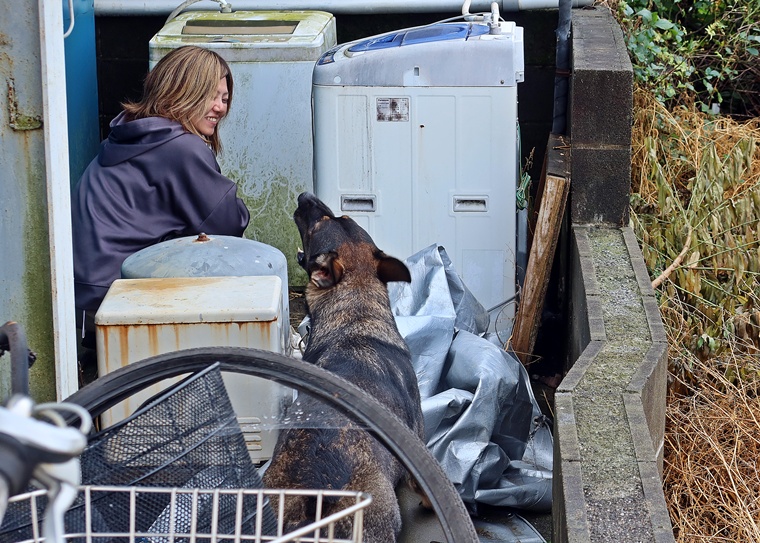
こうしたトレーニングでは、犬が初めて経験する環境や障害物に対して、どのような反応を示すのかを確認しながら、捜索への意欲を維持し、ヘルパーの発見と告知までを確実につなげることを大切にしています。今後も、それぞれのUnitの現在の能力を見極めながら、遮蔽空間や障害物、高低差などの条件を一つずつ丁寧に取り入れ、様々な環境下でも安定した捜索とバークアラートが実行できるよう、実践的な捜索能力の向上につなげていきます。
In these exercises, particular emphasis is placed on observing how dogs respond to unfamiliar environments and obstacles, while maintaining their motivation to search and reinforcing the complete sequence from locating the helper to delivering a reliable bark alert.
Moving forward, we will continue to carefully assess the current capabilities of each dog-handler unit and progressively introduce individual challenges involving concealed spaces, obstacles, and changes in elevation.
By incorporating these conditions gradually and systematically, we aim to further develop the dogs’ practical search capabilities, enabling them to perform searches and deliver clear, consistent bark alerts across a variety of environments.
アドバンスクラスの捜索
アドバンスクラスでは、サーチドッグがどれだけ高い捜索能力を持っていても、その能力を実際の捜索現場で最大限に活かすためには、ハンドラーの観察力・判断力・ハンドリングスキルが欠かせません。捜索中に犬が示す様々な反応を正確に読み取り、必要な場面では適切にサポートする一方で、犬自身の捜索能力や判断を尊重すべき場面では、ハンドラーが過度に介入しないことも重要な技術となります。
For advanced units, no matter how capable a search dog may be, the handler’s observation, decision-making, and handling skills are essential to making full use of the dog’s capabilities in real-world search operations.
Handlers must be able to accurately recognize and interpret the various responses their dogs display during a search and provide appropriate support when necessary. At the same time, knowing when to refrain from unnecessary intervention and allow the dog to work independently, while respecting its search capabilities and decisions, is an equally important skill.
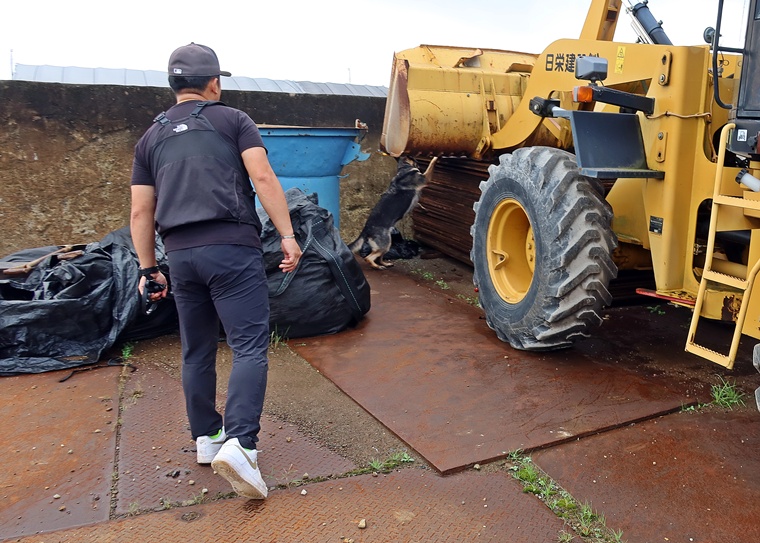
犬に任せるべき場面と、ハンドラーが判断してサポートすべき場面を見極めることは、Unitとしての捜索精度を高めるうえで非常に重要です。犬の能力だけに頼るのでも、ハンドラーの判断だけで捜索を進めるのでもなく、それぞれの役割を理解し、適切に連携できることが求められます。
Recognizing when to allow the dog to work independently and when the handler needs to make decisions and provide appropriate support is essential to improving the overall search accuracy of the dog-handler unit.
Effective search performance requires neither relying solely on the dog’s capabilities nor directing the search entirely through the handler’s own judgment. Instead, both dog and handler must fulfill their respective roles and work together in a coordinated and effective manner.
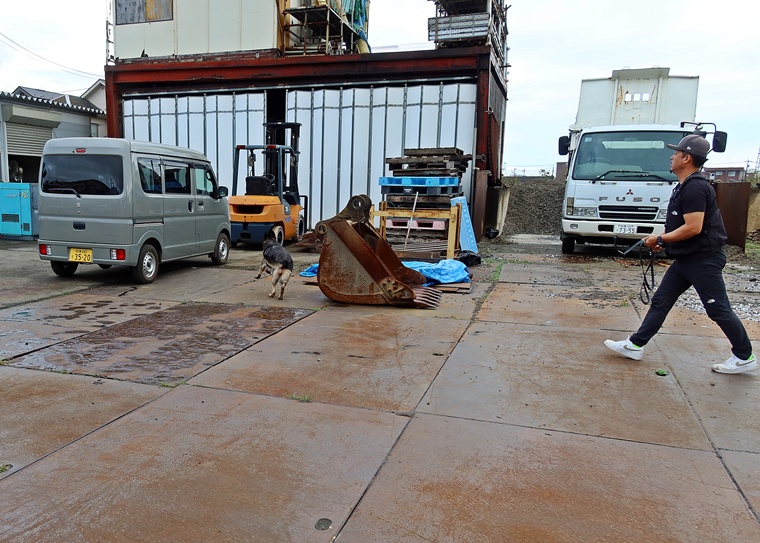
私たちが育成しているのは、単に訓練課題をクリアできる犬ではなく、実際の捜索現場で活動できるUnitです。今回の訓練で確認できた課題についても、目先のトレーニングの完成度だけを求めるのではなく、常に実働を見据えながら、犬の捜索能力とハンドラーの観察・判断・ハンドリングスキルの双方を高められるよう、今後もそれぞれのUnitに合わせた訓練設定や進め方を工夫し、実践的な能力の向上につなげていきたいと思います。
Our goal is not simply to train dogs that can successfully complete training exercises, but to develop dog-handler units capable of operating effectively in real-world search and rescue operations.
The areas for improvement identified during this training session will therefore be addressed with a focus on operational readiness, rather than simply achieving proficiency in individual training exercises.
Moving forward, we will continue to adapt training scenarios and methods to the specific needs and proficiency levels of each unit, with the aim of strengthening both the dog’s search capabilities and the handler’s observation, decision-making, and handling skills.
Through this approach, we will continue working to enhance the practical capabilities of each unit, always keeping the demands of real-world search operations in mind.
HRD
HRDでは、事前に捜索エリア内へソースを設定し、実際の捜索活動を想定したエリアサーチを実施しました。今回のトレーニングでは、単に犬がソースを発見することだけを目的とするのではなく、犬が臭気を捉えた際に示すわずかな行動変化や、セントコーン、セントプールに対する反応を、ハンドラーがどのように観察し、判断につなげていくのかという点を重視しました。捜索中、犬は臭気の状況や環境条件によって様々な反応を示します。その小さな変化をハンドラーが見逃さず、犬が何に反応しているのかを正確に読み取ることが、適切な捜索判断につながります。
For the Human Remains Detection (HRD) training, odor sources were placed within the designated search area in advance, and area search exercises were conducted to simulate real-world search operations.
The primary objective of this session was not simply for the dogs to locate the odor sources, but to focus on how handlers observe and interpret subtle changes in their dogs’ behavior when detecting target odor, including their responses to scent cones and scent pools, and how they use these observations to make informed search decisions.
During a search, dogs may exhibit a wide range of responses depending on odor distribution and environmental conditions. Recognizing these subtle behavioral changes and accurately interpreting what the dog is responding to are essential for handlers to make appropriate decisions throughout the search.
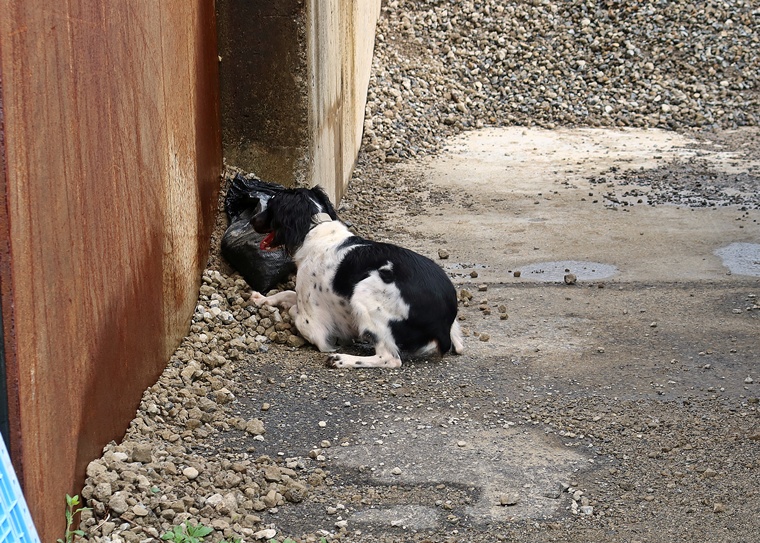
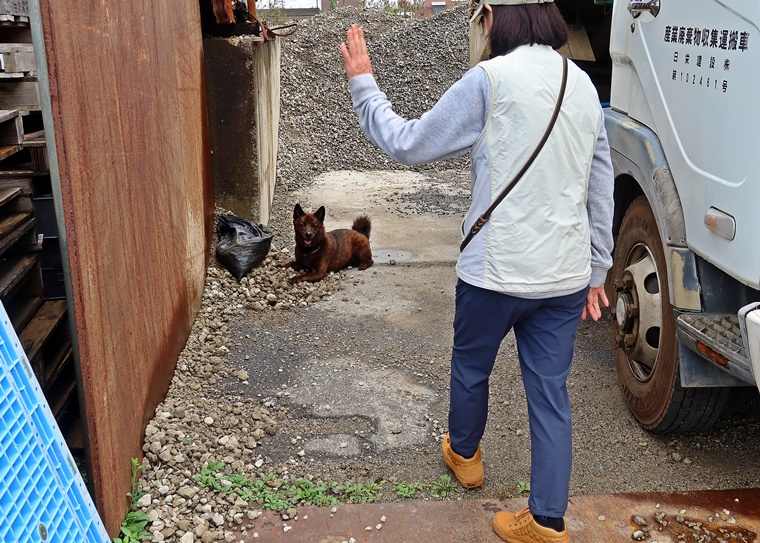
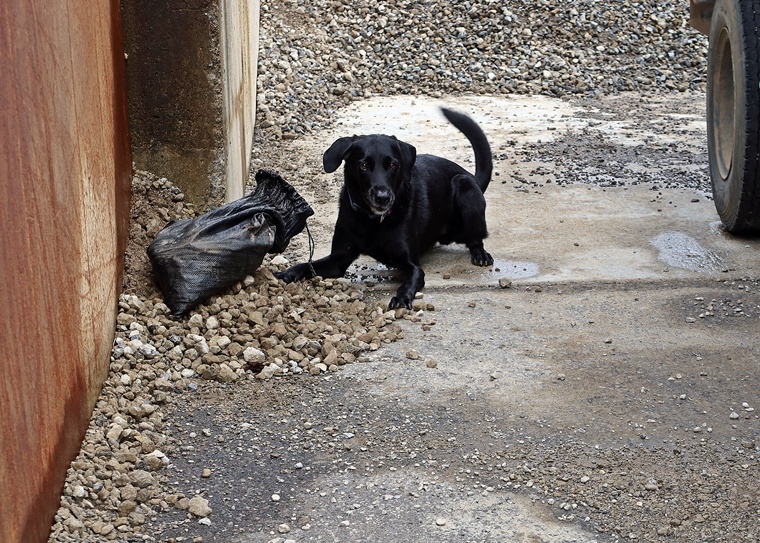
また、犬の反応を確認した際に、ハンドラーが必要以上に介入してしまうと、犬自身が臭気を追ってソースを特定する動きを妨げることにもなります。そのため、犬自身に判断させるべき場面と、ハンドラーが適切にサポートすべき場面を見極めることも、重要なハンドリングスキルとなります。更に、ソースへのアプローチからTFRへ移行するまでの一連の動きを確認し、臭気を捉えてからソースを特定し、確実な告知へとつなげる実行性についても検証しました。
When a handler observes a response from the dog, excessive intervention can interfere with the dog’s ability to independently follow the odor and locate its source.
Therefore, recognizing when to allow the dog to work through the odor independently and when to provide appropriate support is an essential handling skill.
In addition, we evaluated the complete sequence of behaviors, from the dog’s approach to the odor source through to its Trained Final Response (TFR). Particular attention was given to assessing how reliably the dogs could progress from detecting target odor to accurately locating the source and delivering a clear and consistent final indication.
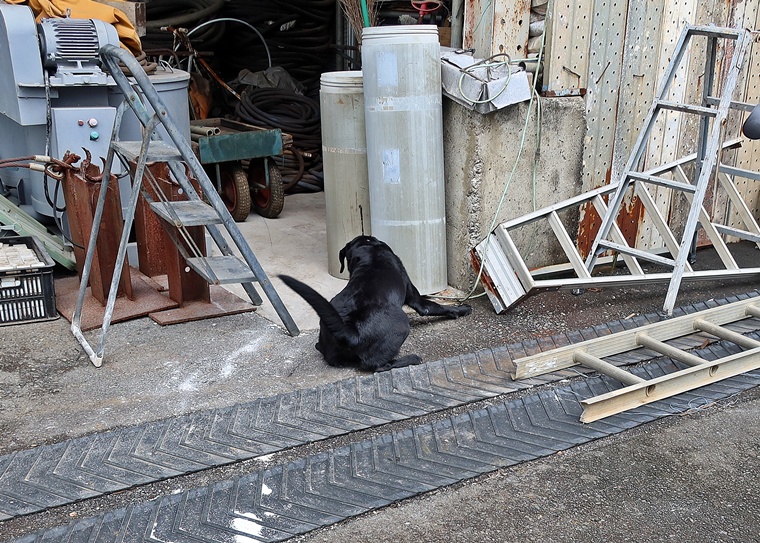
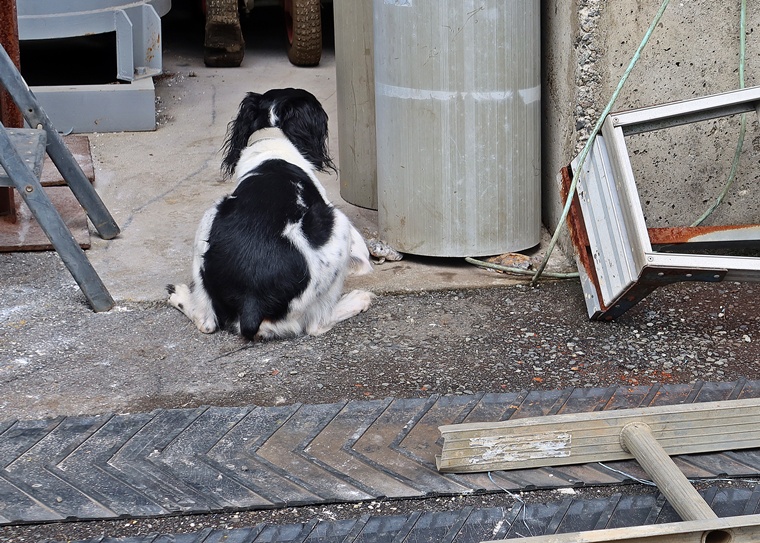
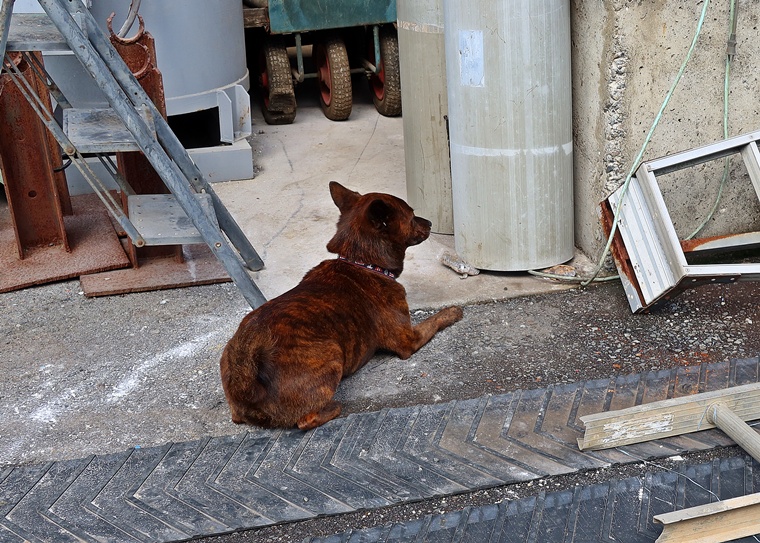
今回の訓練を通して、それぞれのUnitが現在どの段階にあるのか、捜索中の反応やソースへのアプローチ、TFRの実行性など、今後どの部分を更に強化していく必要があるのかを確認することができました。今後も、犬の捜索能力や告知動作の精度を高めるとともに、ハンドラー自身の観察力・判断力・ハンドリングスキルを向上させ、実際の捜索現場で犬の能力を最大限に活かせるUnitの育成につなげていきたいと思います。
Through this training session, we were able to assess the current proficiency level of each dog-handler unit and identify areas requiring further development, including the dogs’ responses during searches, their approaches to odor sources, and the reliability of their Trained Final Responses (TFRs).
Moving forward, we will continue to improve the dogs’ search capabilities and the accuracy and consistency of their final indications, while also strengthening the handlers’ observation, decision-making, and handling skills.
Our goal is to develop dog-handler units capable of making full use of their dogs’ abilities in real-world search operations.
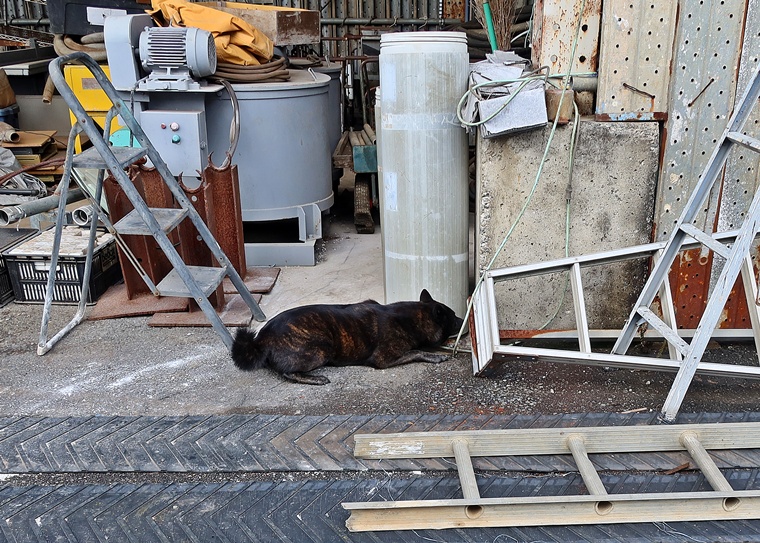
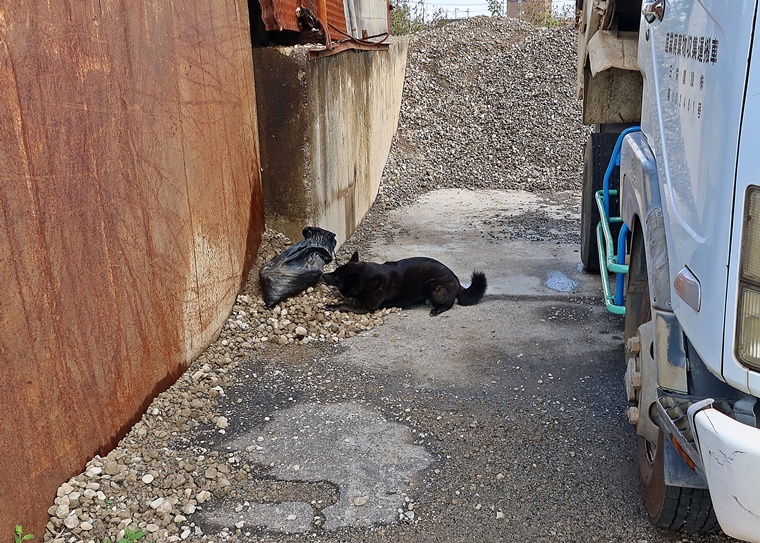
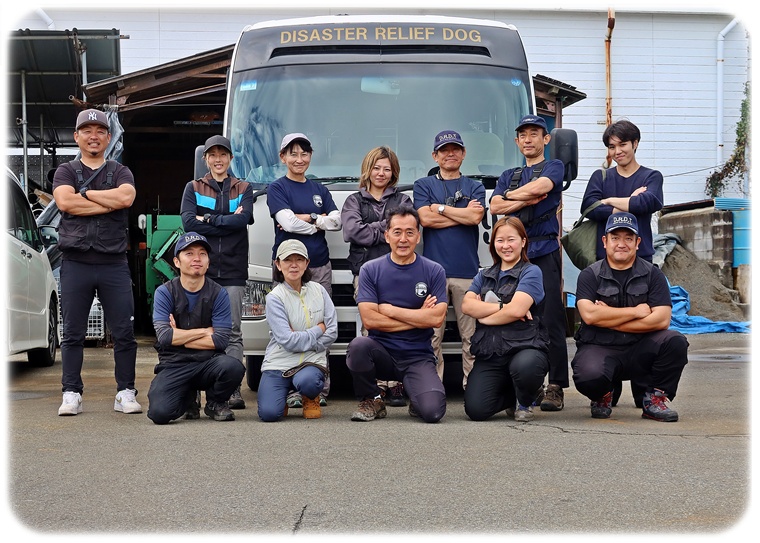
NSAでは今後も、各Unitの習熟度や課題に応じた段階的なトレーニングを継続し、実働現場で求められる犬の高い捜索能力、ハンドラーの的確な観察と判断、そして安全かつ確実に活動できるUnitとしての総合的な能力向上を目指して、継続的な訓練に取り組んでまいります。
NSA will continue to implement progressive training tailored to the proficiency level and individual training needs of each unit. Through continued training, we aim to further develop the capabilities required for real-world operational deployment: strong search performance from the dogs, accurate observation and sound decision-making from the handlers, and the overall ability of each unit to operate safely, reliably, and effectively in the field.
NSAの活動は、民間ボランティアによる行方不明者の捜索活動です。
多くの方々からご支援いただくことで、より速く、より多くの行方不明者捜索にサーチドッグを派遣することができます。皆様のご支援をお願いいたします。
NSA’s activities are carried out by civilian volunteers.
With the support of many individuals, we can deploy search dogs more quickly and to a greater number of missing person cases.
We sincerely ask for your continued support.

関連記事
-
 2026.11.25/ 新潟県消防学校レスキュー隊向けサーチドッグ講義
-
2026.11.22/ NSA (Trailig/HRD/Disaster)訓練会(相模原市内)
-
2026.11.11/ 長野県栄村行方不明者捜索
-
REDOG プレMRTレポート_2026.10.10
-
NSA Trailing/Disaster/HRD 訓練会レポート_2026.10.11
-
NPO法人 北東北捜索犬チーム Trailig/HRD Workshop_2026.10.04
-
2026.11.03/NPO法人 北東北捜索犬チーム Trailing/HRD 適性試験
-
2026.10.25/ NSA (Trailig/HRD/Disaster)訓練会(相模原市内)ー終了しましたー