NSA Trailing/Disaster/HRD 訓練会レポート_2026.10.11
NSA Trailing/Disaster/HRD Training
2026年10月11日(日) NSA Trailing/Disaster/HRD・訓練会。
秋晴れの快晴に恵まれ、気温17℃、湿度43%と、犬たちにとっても非常に活動しやすいコンディションの中で訓練を実施することができました。AM6:30より市街地においてTrailing訓練を開始し、その後AM8:00からは会場を資材置き場へ移動して、Disaster/HRD訓練を実施しました。
今回も、それぞれのUnitの習熟度や現在の課題に応じた設定を行い、犬の捜索能力だけではなく、ハンドラーの観察力や判断力、Unitとしての連携を高めることを目的とした実践的なトレーニングに取り組みました。
Trailingでは、これまでとは異なる市街地環境を使用し、ショートレンジでのScent Article(セントアーティクル)からのTrailingトレーニングを行いました。Scent Articleから対象臭を認識し、その臭跡を追って対象者へ到達するという一連の流れについて、環境が変化した場合でも安定して実行できるかを確認しました。また、アドバンスクラスについては、ダブルブラインドでのトレーニングを実施しました。サポート役もハンドラー自身も対象者の位置やトレールの情報を把握していない状況では、犬が捜索中に示すわずかな反応を見逃さず、その情報を基に進行方向や捜索の継続について判断することが求められます。犬の持っている臭跡追及能力を最大限に活かすためにも、ハンドラーが先入観を持たずに犬の反応を観察し、必要以上に介入することなく、適切なハンドリングにつなげることを意識したトレーニングとなりました。
Disasterでは、限定されたエリア内にヘルパーを配置し、犬が直接ヘルパーへアクセスできる設定で、ブラインドによる捜索トレーニングを行いました。今回の目的は、単にヘルパーを発見することだけではなく、犬がセントコーンを捉えた際に示す反応や、臭気を追ってヘルパーへ到達するまでの動き、あるいは臭気の流れから捜索エリアを絞り込んでいく過程を、ハンドラーが正確に観察することです。犬がどのような反応や捜索パターンを示すのかをハンドラーが理解し、Unitとしての特徴を把握することで、今後の実働における判断やハンドリングに活かせるようトレーニングを進めました。また、今回は初めての経験となるスケルトン構造の階段の上り下りにも取り組みました。犬の視覚からは前方が透けて見える階段は、通常の階段とは異なる視覚的・足場的な刺激がありますので、犬にとって新しい環境経験となります。無理に進ませるのではなく、それぞれの犬の反応を確認しながら経験を積み重ねることで、今後の様々な捜索環境への対応力につなげていきたいと思います。
HRDでは、4カ所にそれぞれ異なるソースを設定し、捜索からTFR(Trained Final Response)までの一連の流れを確認する反復トレーニングを行いました。今回は比較的狭い限定エリアでの捜索でしたが、風の流れによってソースからのセントコーンが変化し、場所によってはセントプールが形成されるなど、犬が示す臭気への反応にも違いが見られます。そのような条件の中で、犬がどの段階で臭気を捉え、どのようにソースへアプローチしているのかをハンドラーが観察し、正確なソースの特定からTFRへつなげられるようトレーニングを進めました。
特に、セントコーンやセントプールへの反応と、実際のソースを特定した際の反応を適切に見極めることは、精度の高いTFRを確立する上でも重要になります。単に告知動作を繰り返すのではなく、犬自身が対象臭を正確に認識し、自信を持ってTFRを実行できるよう、それぞれのUnitの反応や理解度に合わせて取り組みました。
今回の訓練会でも、それぞれのUnitのレベルや現在の課題に応じた設定を行うことで、犬の捜索能力や告知動作の精度を確認するとともに、ハンドラーの観察力、判断力、ハンドリングスキル、そしてUnitとしての連携について、実践的な経験を積み重ねることができました。
犬が高い捜索能力を持っていても、その能力を実働の中で最大限に活かすためには、ハンドラーが犬の反応を正確に読み取り、状況に応じた適切な判断とハンドリングを行うことが不可欠です。
今後も継続的な訓練を通じて、それぞれのUnitが抱える課題を一つずつ明確にしながら、犬の捜索能力だけではなく、ハンドラーの観察・判断・ハンドリング技術を含めたUnit全体の能力向上につなげていきたいと思います。
試験や訓練の中だけで成立する作業ではなく、実際の捜索現場で確実に活動できるUnitの育成を目指し、これからも一つ一つの経験を大切に積み重ねていきます。
Sunday, October 11, 2026 – NSA Trailing / Disaster Search / HRD Training Exercise
We were fortunate to have clear autumn skies and excellent training conditions, with a temperature of 17°C (63°F) and humidity at 43%. The comfortable weather provided favorable conditions for the dogs to work throughout the morning.
The Trailing session began at 6:30 a.m. in an urban environment. At 8:00 a.m., the training moved to a material storage site, where the Disaster Search and HRD (Human Remains Detection) sessions were conducted.
As in previous sessions, training scenarios were tailored to the proficiency level and current training priorities of each unit. The exercises were designed not only to further develop the dogs’ search capabilities, but also to strengthen the handlers’ observation and decision-making skills, as well as effective coordination between dog and handler under realistic search conditions.
Trailing
For the Trailing session, we utilized a different urban environment from those used in previous training sessions and conducted short-range trailing exercises using scent articles.
The objective was to assess whether the dogs could consistently perform the complete sequence of recognizing the target odor from the scent article, acquiring the corresponding scent trail, and following it to locate the target person, even when working in an unfamiliar environment.
For the advanced units, double-blind trailing exercises were conducted. Under these conditions, neither the handler nor the person providing support had prior knowledge of the target person’s location or the trail route.
This required handlers to carefully observe even the slightest changes in their dogs’ behavior and use that information to make decisions regarding the appropriate direction of travel and whether to continue working a particular section of the trail.
To make full use of the dogs’ natural scent-trailing capabilities, particular emphasis was placed on the handlers’ ability to observe and interpret the dogs’ responses without preconceived assumptions, avoid unnecessary intervention, and adapt their handling appropriately based on the information provided by the dog.
Disaster Search
During the Disaster Search session, blind search exercises were conducted within a defined search area, with helpers positioned in locations where the dogs could physically access them.
The primary objective was not simply for the dogs to locate the helpers, but for handlers to accurately observe the complete search process. Particular attention was given to the dogs’ behavioral responses when encountering the scent cone, how they worked the odor to its source and located the helper, and how they progressively narrowed down the search area based on the movement and availability of scent.
By observing the individual responses and search patterns displayed by their dogs, handlers were encouraged to develop a better understanding of the specific working characteristics of each unit. This understanding is essential for making appropriate decisions and applying effective handling strategies during future operational searches.
The training also introduced a new environmental challenge: ascending and descending open-riser stairs.
Unlike conventional stairs, open-riser stairs allow dogs to see through the gaps between the steps, presenting unfamiliar visual and footing-related challenges. For dogs encountering this type of structure for the first time, it provides a valuable opportunity to develop confidence and adaptability in unfamiliar environments.
Rather than forcing the dogs to proceed, the exercises were conducted progressively while carefully observing each dog’s responses and allowing them to gain experience at an appropriate pace.
Through continued exposure to different structures and environmental conditions, we aim to further develop the dogs’ confidence and ability to adapt to the varied environments they may encounter during real-world search operations.
HRD (Human Remains Detection)
During the HRD session, four different training aids were placed at separate locations within the search area. Repetitive exercises were conducted to evaluate and reinforce the complete behavioral sequence from searching and locating the target odor source through to performing the Trained Final Response (TFR).
Although the search area was relatively small and clearly defined, changes in wind direction affected the formation and movement of the scent cones, while scent pools developed in certain locations. These variations in odor distribution resulted in different behavioral responses from the dogs as they worked through the search area.
Under these conditions, particular emphasis was placed on the handlers’ ability to recognize when their dogs first encountered the target odor, observe how they worked toward the source, and accurately interpret the behavioral changes displayed throughout the process.
The training focused on helping handlers understand the distinction between the dogs’ responses to scent cones or scent pools and their responses when accurately locating the actual odor source. This distinction is particularly important when developing a precise and reliable TFR.
Rather than simply repeating the final indication behavior, the exercises were designed to help each dog accurately recognize and pinpoint the target odor source before confidently performing the TFR.
Training was tailored to the current responses, understanding, and proficiency level of each unit, with the objective of progressively strengthening the association between accurate source localization and a clear, consistent final indication.
Overall Training Objectives and Future Development
Throughout this training session, exercises were designed according to the proficiency level and current training priorities of each unit.
In addition to evaluating the dogs’ search performance and the accuracy and reliability of their indications, the exercises provided valuable opportunities to further develop the handlers’ observation, decision-making, and handling skills, as well as effective coordination between dog and handler.
Even when a dog possesses strong search capabilities, maximizing those abilities under real-world operational conditions depends on the handler’s ability to accurately recognize and interpret the dog’s responses, make appropriate decisions based on the developing search situation, and apply effective handling without unnecessary intervention.
Through continued training, we will work to identify and address the individual challenges of each unit step by step. Our objective is to develop not only the dogs’ search capabilities, but also the overall performance of each unit, including the handlers’ observation, decision-making, and handling skills.Our goal is not simply to develop units capable of performing successfully during training exercises or passing assessments, but to develop units that can operate safely, reliably, and effectively in real-world search operations.
We will continue to build upon each training experience, progressively strengthening the skills, confidence, and teamwork required for future operational deployments.
Trailing
セントアーティクルトレーニングとリカバリートレーニング
ヘルパーの臭いが付着したScent Article(セントアーティクル)から捜索対象者の臭いを識別し、その臭跡を追って対象者へ到達するという一連の流れをシッカリ理解できるよう、現在の習熟度に合わせながら段階的にステップアップを進めていきます。Trailingでは、単にヘルパーの臭跡を追うことだけではなく、犬が対象臭を捉えている際の反応や、臭跡を見失った際に示すネガティブ反応などを、ハンドラーが正確に観察し、判断できることが重要です。
Training will continue to progress gradually according to the current proficiency level of each unit, with the objective of helping the dogs develop a clear understanding of the complete sequence: identifying the target odor from a scent article carrying the helper’s scent, acquiring the corresponding scent trail, and following it to locate the target person.
In Trailing, however, the objective is not simply for the dog to follow the helper’s scent trail. It is equally important for the handler to accurately observe, recognize, and interpret the dog’s behavioral responses when working the target odor, as well as the negative responses displayed when the dog loses the scent trail. These observations provide essential information that enables the handler to make appropriate decisions throughout the search.
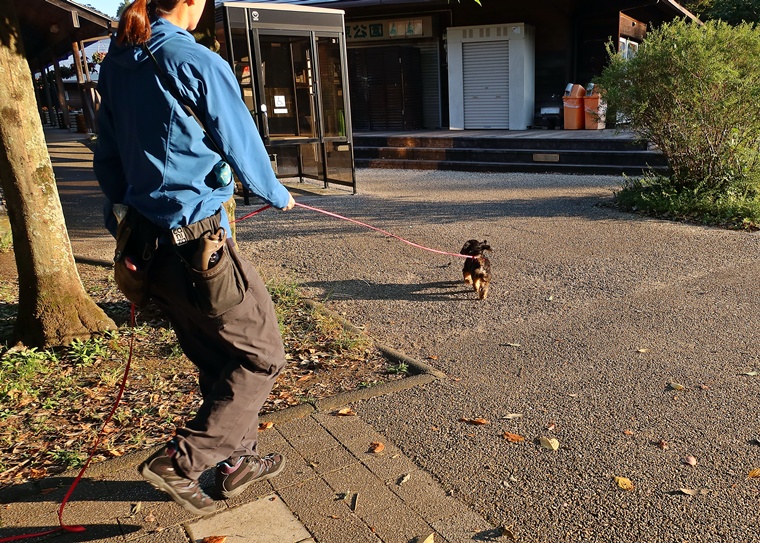
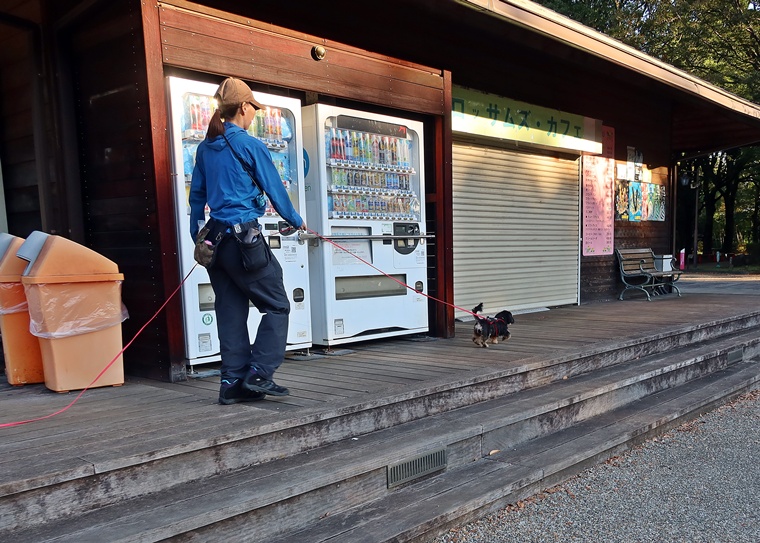
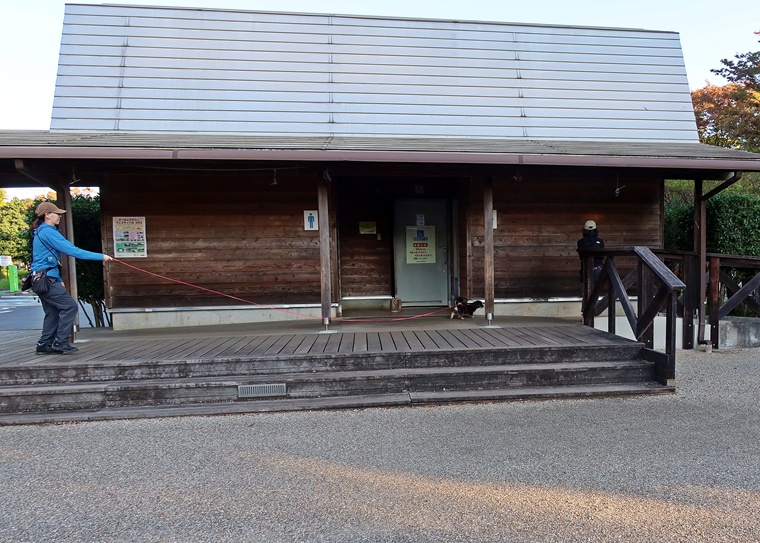
また、実際にヘルパーが通過したラインと、犬が臭跡を追って進むラインは、必ずしも一致するとは限りません。気温や湿度、風の流れ、周囲の建物や障害物など、様々な環境条件によって臭気の流れや分布が変化するため、犬がどのように臭跡を捉え、どのようなラインを選択しているのかを理解する必要があります。特に、ヘルパーが実際に通過したラインから犬が外れた場合でも、それが臭気の流れによるものなのか、あるいは対象臭を見失っているのかを、犬の行動や反応から見極めることがハンドラーの重要なスキルとなります。
It is also important to understand that the actual route taken by the helper and the path followed by the dog while working the scent trail do not necessarily coincide.
Environmental factors such as temperature, humidity, wind direction, surrounding buildings, and physical obstacles can influence how scent moves and disperses. As a result, handlers need to understand how their dogs acquire and work the available scent, and why they may choose a path that differs from the helper’s actual route.
In particular, when a dog moves away from the original trail route, one of the handler’s key skills is the ability to distinguish between the dog following scent that has shifted or dispersed away from the trail and the dog actually losing the target odor. Making this distinction requires careful observation and accurate interpretation of the dog’s behavior and responses throughout the search.
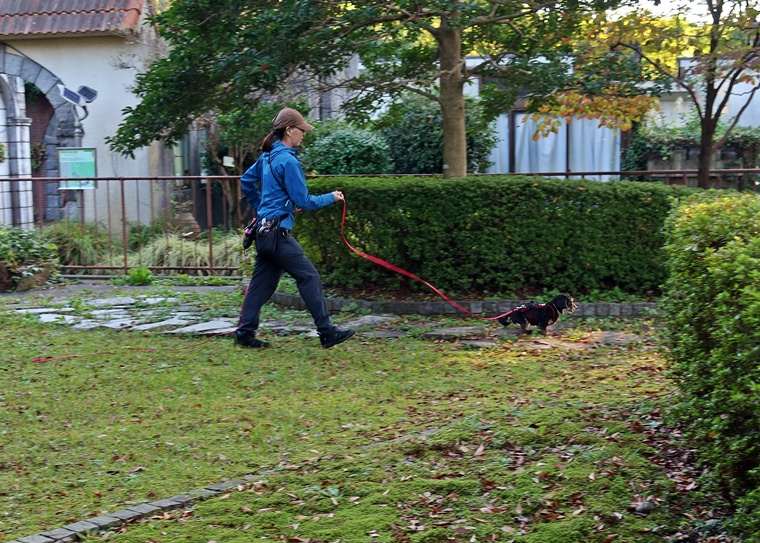
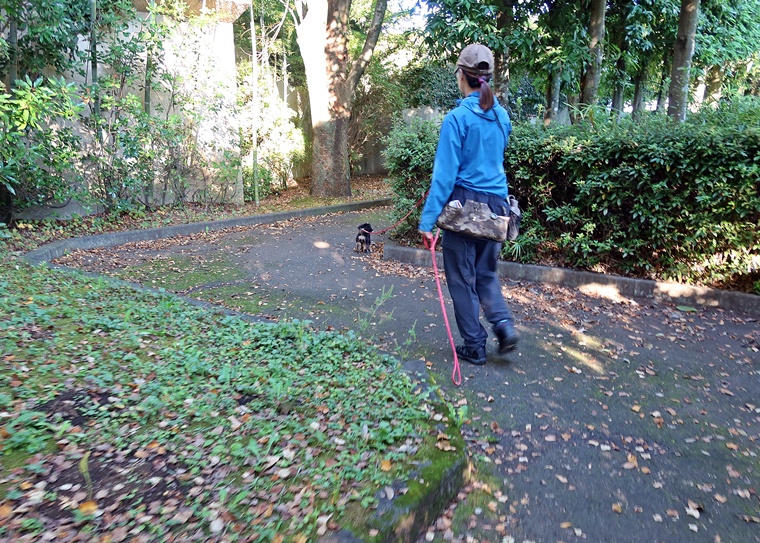
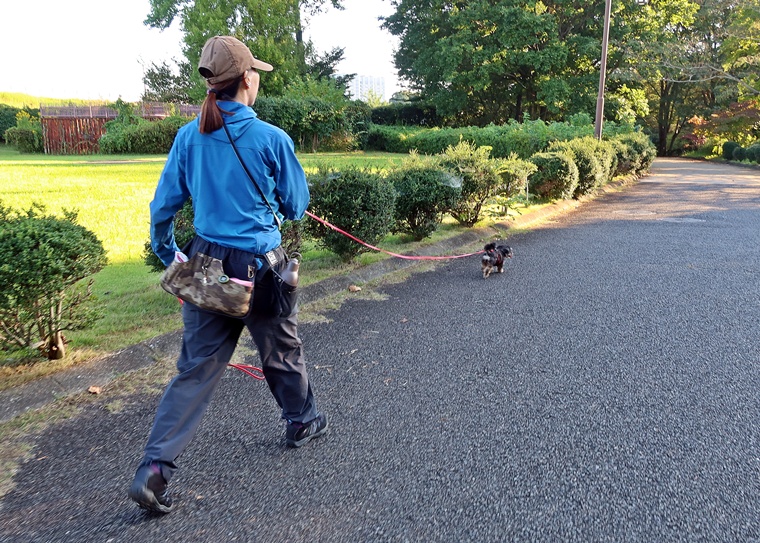
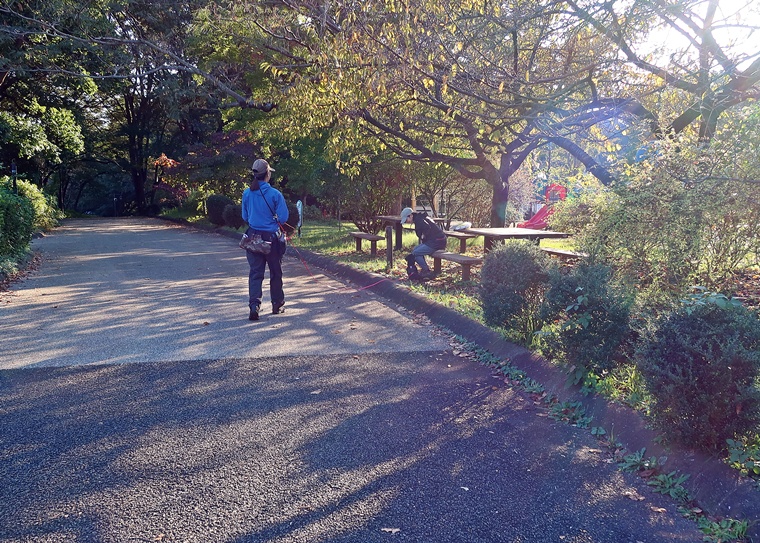
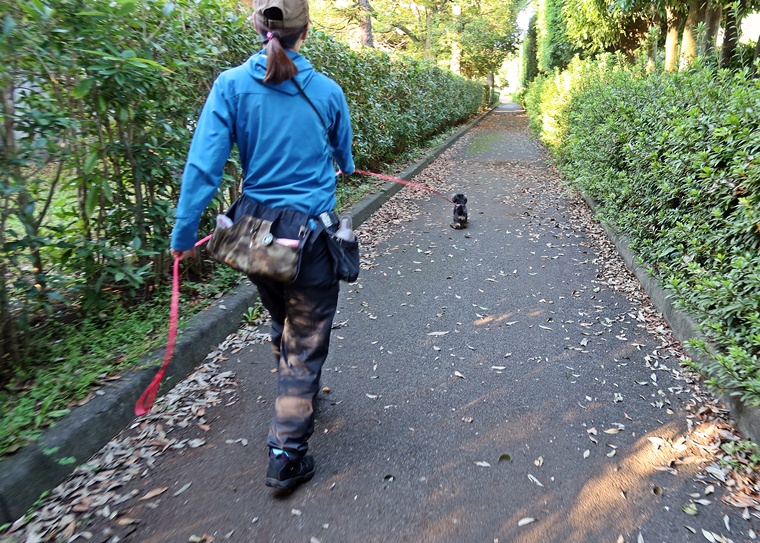
そのため、トレールの距離や経過時間、アスファルトや土などの路面状況、周囲の環境や刺激、風向きなどの条件を一つずつ変化させながら、それぞれの条件下で犬がどのような反応を示すのかを確認し、経験を積み重ねていきます。
トレーニングでは、単に距離を延ばしたり難易度を上げたりすることを目的とせず、設定した条件に対して犬がどのように反応し、ハンドラーがその反応をどこまで正確に読み取れているのかを確認することが大切です。
犬の持っている臭跡追及能力を最大限に活かすためにも、ハンドラーが先入観やヘルパーの通過ラインだけにとらわれることなく、犬自身が示す情報を基に適切な判断とハンドリングができるよう、犬とハンドラー双方の理解を深めながら、より実践的なTrailingへとつなげていきましょう。
そして、トレーニングの最後にはモチベーションランを取り入れ、難易度の捜索によって生じた負担をリカバリーし、犬自身が意欲的に臭跡を追ってヘルパーへ到達するという成功経験で終了できるようにしました。難しい課題に取り組むことだけがトレーニングではなく、最後に犬の自信と捜索への意欲をシッカリ引き出し、良い状態で終了することも大切です。今回の経験を次回のトレーニングへの期待感につなげ、今後も高い捜索意欲を維持しながら、より実践的なTrailingへとステップアップしていきましょう。
To further develop these skills, training will progress by changing one variable at a time, including trail distance, trail age, surface conditions such as asphalt and soil, surrounding environmental factors and distractions, and wind direction. This approach allows us to observe how each dog responds under different conditions while gradually building a wider range of search experiences.
The objective is not simply to increase trail distance or overall difficulty. Rather, it is important to evaluate how the dog responds to each specific training condition and how accurately the handler can recognize and interpret those responses.
To make full use of the dog’s natural scent-trailing capabilities, handlers must learn to avoid preconceived assumptions and resist relying solely on the helper’s actual route. Instead, they should base their decisions and handling on the information provided by the dog.
By progressively developing the understanding and skills of both dog and handler, we aim to build a stronger foundation for more realistic and operationally relevant Trailing scenarios.
At the end of the training session, motivation runs were incorporated as a recovery exercise to help the dogs recover from the mental demands of the more challenging search tasks. This allowed each dog to finish the session with a positive and rewarding experience, confidently following the scent trail and successfully locating the helper.
Training is not simply about exposing dogs to increasingly difficult challenges. It is equally important to restore and reinforce their confidence, maintain strong motivation to search, and ensure that each session ends on a positive note.
By finishing with a successful and rewarding search experience, we aim to maintain the dogs’ enthusiasm for future training and continue progressing toward more advanced and operationally relevant Trailing work.
ダブルブラインドトレール
アドバンスクラスのUnitについては、ダブルブラインドでの捜索を設定し、現在の課題となっている「犬が示すネガティブ反応をハンドラーが正確に読み取る技術」の向上をテーマにトレーニングを実施しました。
Trailingでは、犬が対象臭を捉えている際の反応だけではなく、臭跡を見失った際や、進行方向に対象臭が存在しない場合に示すネガティブ反応を正確に読み取り、その情報を基に適切な判断とハンドリングにつなげることが非常に重要です。
For the advanced units, double-blind trailing exercises were conducted, with a continued focus on one of their key training objectives: improving the handlers’ ability to accurately recognize and interpret the dogs’ negative responses.
In Trailing, it is essential for handlers to recognize not only the behavioral responses displayed when their dogs are actively working the target odor, but also the negative responses shown when the dogs lose the scent trail or when the target odor is no longer present in their current direction of travel.
Accurately interpreting these responses and using the information provided by the dogs to make appropriate decisions and adjust handling accordingly is a critical skill for effective Trailing operations.
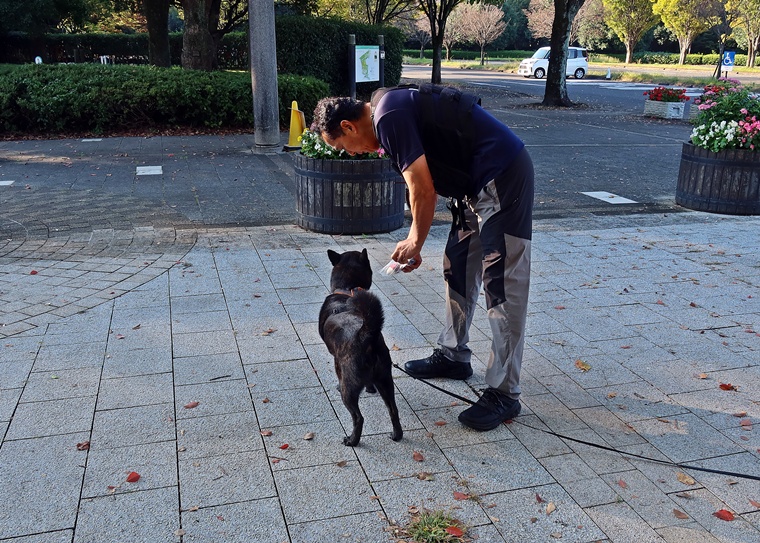
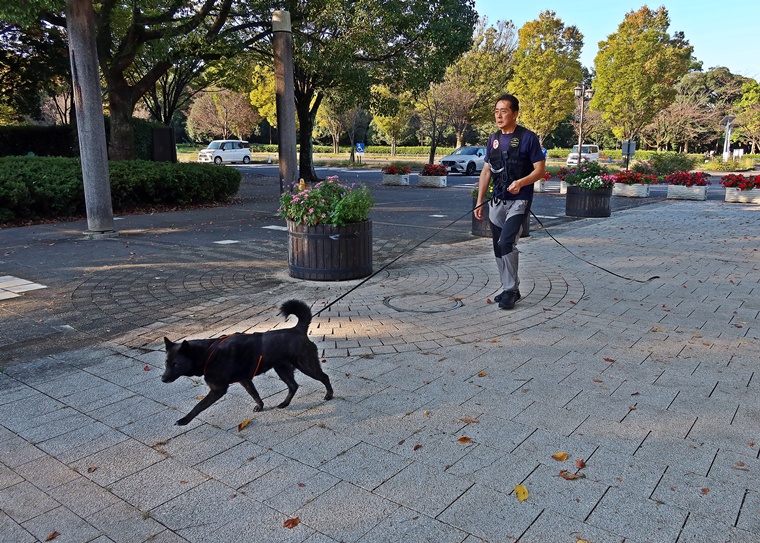
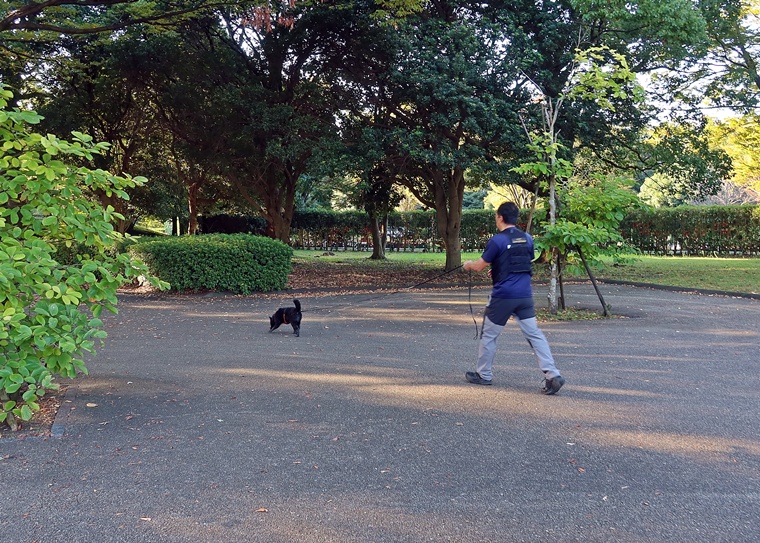
今回は、臭気が拡散しやすく、風の影響によって臭跡の分布が複雑に変化するオープンスペースや、捜索中に人や犬が通過したり、すれ違ったりする環境を設定しました。
このような条件の中でも、周囲の刺激に左右されずに対象臭への集中を維持できるか、また、臭気の変化に対して犬が示すわずかな行動変化をハンドラーが見逃さず、進行方向の判断につなげられるかを確認しました。
特にダブルブラインドでは、サポート役もハンドラー自身も対象者の移動経路や現在位置を把握していないため、犬の反応を根拠として判断する能力が求められます。
犬が進行方向を変えたり、一時的に臭跡から離れたりした場合でも、単にヘルパーが通過したラインから外れたことをミスと判断するのではなく、ネガティブ反応なのか、あるいは環境によって移動・拡散した対象臭を捉えているのかを、犬の行動から見極めることが大切です。
For this training session, scenarios were designed to include open areas where scent could disperse and its distribution could become more complex due to wind conditions, as well as environments where people and other dogs passed through or crossed paths with the searching units.
Under these conditions, we evaluated whether the dogs could maintain their focus on the target odor despite surrounding distractions, and whether the handlers could accurately recognize even the slightest behavioral changes displayed by their dogs in response to changes in scent availability and distribution. Particular emphasis was placed on the handlers’ ability to interpret these responses and use the information to determine the appropriate direction of travel.
In double-blind trailing exercises, neither the handler nor the person providing support has prior knowledge of the target person’s route or current location. This makes it essential for handlers to base their decisions on the information provided by the dog, rather than on assumptions about where the trail should lead.
Even when a dog changes direction or temporarily moves away from the original trail route, it is important not to automatically interpret this as a mistake simply because the dog is no longer following the exact path taken by the helper.
Instead, handlers must carefully observe and interpret the dog’s behavior to determine whether the dog is displaying a negative response indicating a loss of the scent trail, or is continuing to work target odor that has shifted or dispersed away from the original trail route due to environmental conditions.
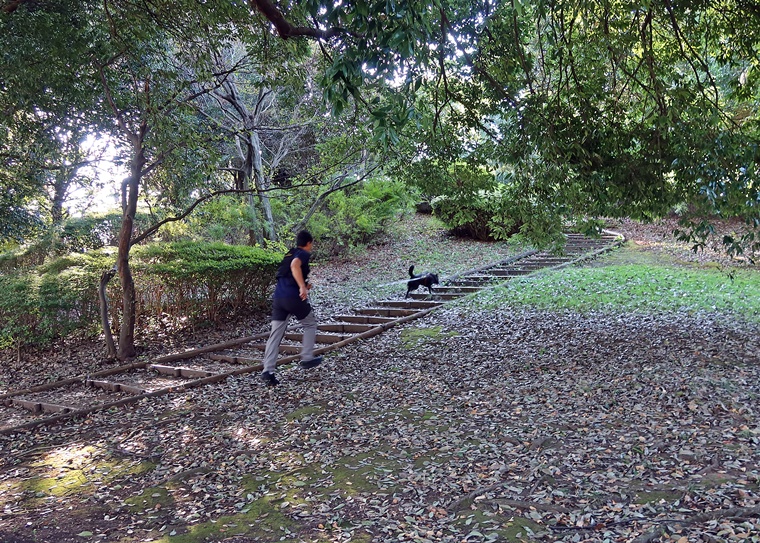
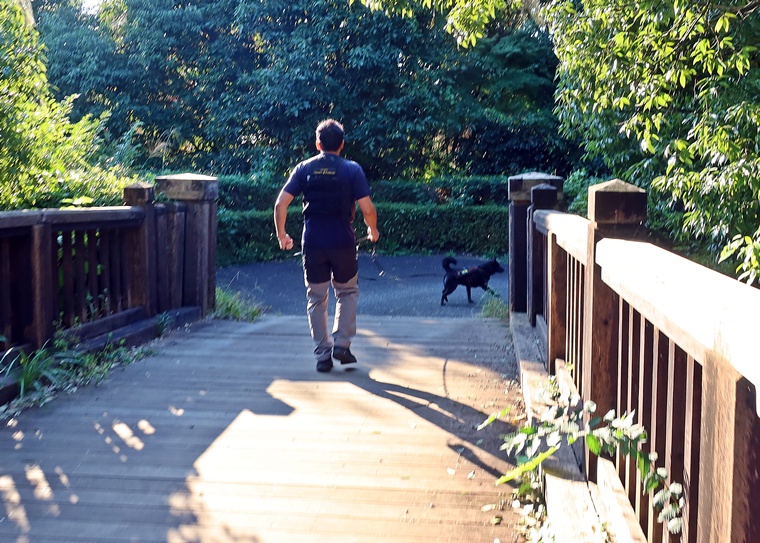
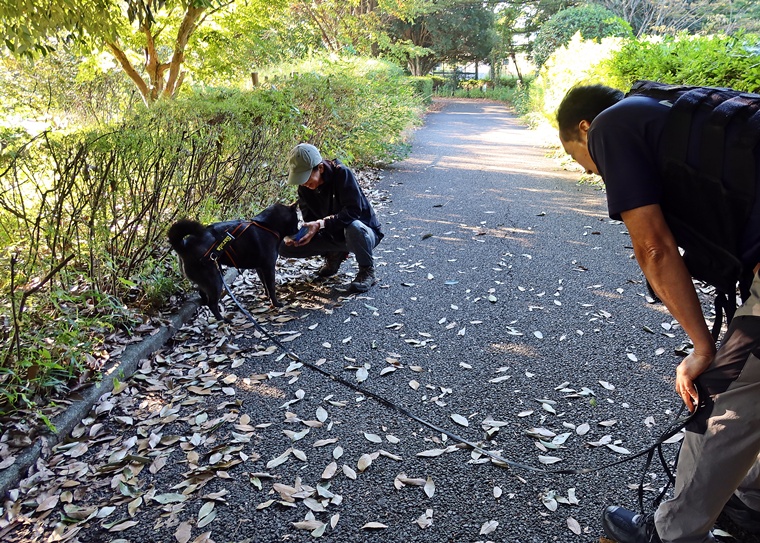
実際のTrailingでは、対象者が歩いたラインと犬が臭気を追って進むラインが必ずしも一致するわけではありません。気温や湿度、風の流れ、周囲の建物や障害物などによって臭気の分布は変化しますので、ハンドラーが対象者の通過ラインだけにとらわれず、犬が示す情報を正確に読み取る必要があります。今回のトレーニングでは、犬自身の臭跡追及能力を信頼しながら、ハンドラーが先入観によって進行方向を決めるのではなく、犬の反応を根拠として判断し、適切にハンドリングすることを重点的に確認しました。
今後も様々な環境条件でのダブルブラインドを経験し、ポジティブ反応とネガティブ反応の違いをより正確に読み取れるよう、ハンドラーの観察力と判断力を高め、実働における精度の高いTrailingにつなげていきましょう。
In real-world Trailing operations, the actual route taken by the target person and the path followed by the dog while working the scent trail do not necessarily coincide. Environmental factors such as temperature, humidity, wind direction, surrounding buildings, and physical obstacles can influence how scent moves and disperses.
Therefore, handlers must avoid focusing solely on the target person’s actual route and instead accurately recognize and interpret the information provided by their dogs.
During this training session, particular emphasis was placed on trusting the dogs’ natural scent-trailing capabilities while ensuring that handlers based their decisions on the dogs’ behavioral responses rather than preconceived assumptions about the direction of travel. The objective was to strengthen the handlers’ ability to make sound decisions and adapt their handling appropriately according to the information provided by the dog.
Moving forward, we will continue to incorporate double-blind trailing exercises under a variety of environmental conditions, with the aim of further developing the handlers’ observation and decision-making skills. By improving their ability to accurately distinguish between positive responses indicating that the dog is working the target odor and negative responses indicating that the trail may have been lost or is not present in the current direction of travel, we aim to build more accurate, reliable, and operationally effective Trailing capabilities.
Disaster
限定エリアでの捜索
初歩段階のUnitについては、限定されたエリア内にヘルパーを配置し、犬が直接ヘルパーへアクセスできる設定で、ブラインドによる捜索トレーニングを行いました。
今回の目的は、単にヘルパーを発見することだけではなく、犬がセントコーンを捉えた際に示す反応や、臭気を追ってヘルパーへ到達するまでの動き、また、臭気の流れを捉えながら捜索エリアを絞り込んでいく過程を、ハンドラーが正確に観察し、理解することです。
初歩段階では、犬自身がどのように臭気を捉え、どのような行動変化を示しながらヘルパーへアプローチしているのかを、ハンドラーが把握することが非常に重要になります。特に、セントコーンを捉えた瞬間の動きや、臭気の強弱によって進行方向を変える様子、ヘルパーへ近づくにつれて見られる反応の変化など、それぞれの犬が持っている捜索時の特徴を見逃さないことが大切です。
Disaster Search – Foundation-Level Units
For the foundation-level units, blind search exercises were conducted within a defined search area, with helpers positioned in locations where the dogs could physically access them.
The primary objective was not simply for the dogs to locate the helpers, but for the handlers to accurately observe and understand the entire search process. Particular attention was given to the dogs’ behavioral responses when first encountering the scent cone, how they worked the odor to its source and approached the helper, and how they progressively narrowed down the search area by following the movement and distribution of scent.
At this early stage of training, it is particularly important for handlers to develop a clear understanding of how their dogs detect and work the available scent, and how their behavior changes as they approach the helper.
Handlers were encouraged to pay close attention to each dog’s individual search characteristics, including the subtle changes in movement when first encountering the scent cone, adjustments in direction in response to variations in scent concentration, and changes in behavior as the dog moved closer to the helper.
Recognizing and understanding these individual behavioral patterns is an essential foundation for accurately interpreting the dog’s responses and developing effective handling skills during future search operations.
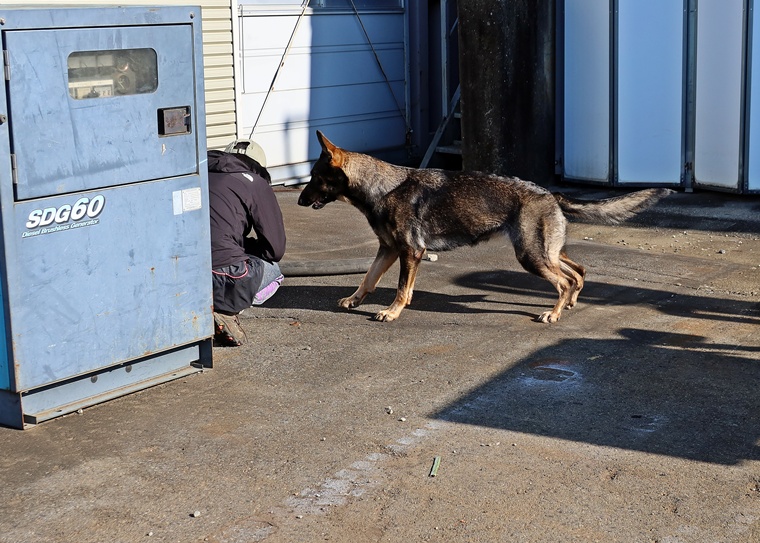
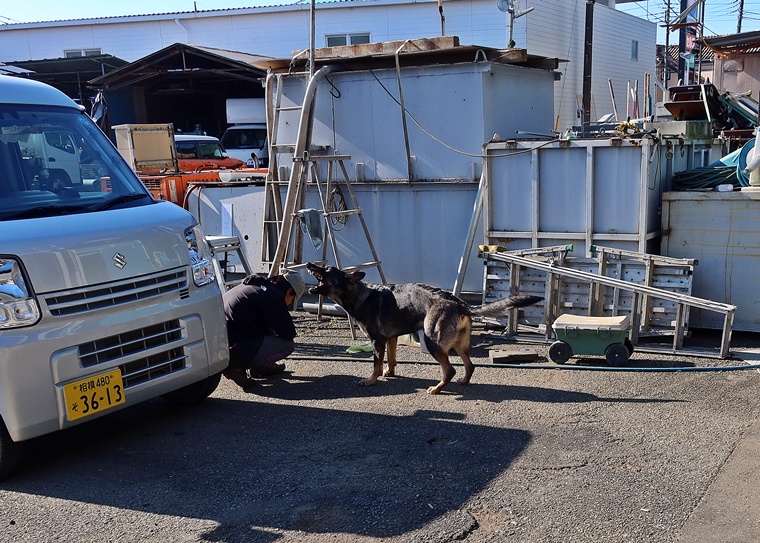
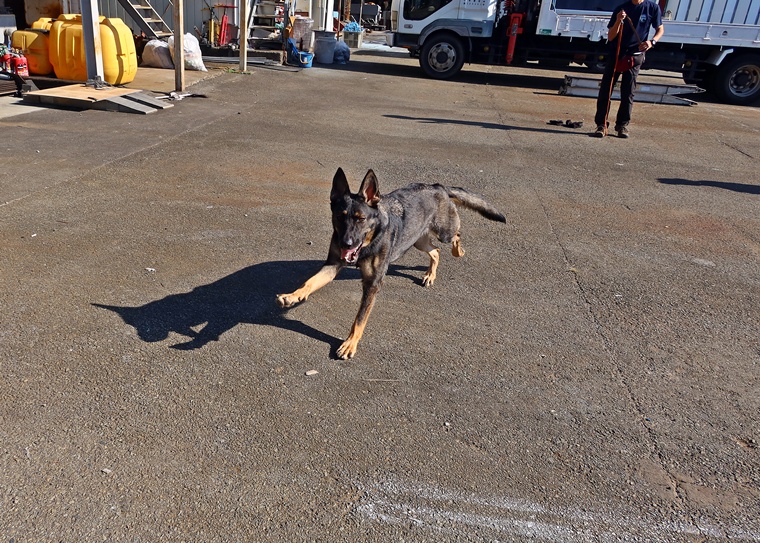
ブラインドでの捜索では、ハンドラーがヘルパーの位置を把握していないため、犬の反応を根拠として状況を判断する必要があります。ハンドラー自身の予測や先入観で犬を誘導するのではなく、犬が示す情報を信頼しながら、必要な場面で適切なサポートができるようにしていきましょう。また、同じ設定であっても、犬によって臭気の捉え方やヘルパーへのアプローチの仕方には違いがあります。その違いを理解し、それぞれの犬が示す反応や捜索パターンをUnitとしての特徴として把握することが、今後のハンドラーの判断力やハンドリングスキルの向上につながります。
今回のような限定エリアでのブラインド捜索を通して、犬の捜索能力を高めるとともに、ハンドラーが犬の反応を正確に読み取る経験を積み重ね、今後のより広いエリアや複雑な環境での捜索、そして実働における適切な判断とハンドリングにつなげていきましょう。
During blind search exercises, handlers do not know the location of the helper and must therefore assess the search situation based on the information provided by their dogs. Rather than directing the dogs according to their own expectations or preconceived assumptions, handlers should learn to trust and accurately interpret their dogs’ responses, providing appropriate support when necessary without unnecessary intervention.
Even under identical search conditions, individual dogs may differ in how they detect and work the available scent and how they approach the helper. Understanding these differences and recognizing each dog’s individual behavioral responses and search patterns as distinct working characteristics of the unit will help handlers further develop their decision-making and handling skills.
Through continued blind search exercises within defined search areas, we aim not only to strengthen the dogs’ search capabilities but also to provide handlers with repeated opportunities to accurately observe and interpret their dogs’ responses.
By progressively building upon these experiences, we will work toward more advanced searches in larger areas and more complex environments, while developing the sound judgment, effective handling, and coordination between dog and handler required for real-world search operations.
遮蔽空間へのバークアラート
また、ヘルパーを直接視認できない遮蔽空間にも設定を行い、臭気を手掛かりにヘルパーの位置を特定し、対象者が見えない状況でも安定したバークアラートを継続できるよう、強化トレーニングを行いました。遮蔽空間での捜索では、犬がセントコーンを捉えてヘルパーの位置を絞り込んだ後、視覚的に対象者を確認できなくても、その場所に対して自信を持ってバークアラートを実行できることが重要になります。
特に初歩段階のUnitでは、ヘルパーを発見することへの意欲を維持しながら、直接アクセスできる設定から遮蔽された設定へと段階的に移行し、臭気による対象者の特定と告知動作を関連付けていく必要があります。
Additional training scenarios were introduced in concealed spaces where the helper was not directly visible, with the aim of strengthening the dogs’ ability to locate the helper using scent alone and maintain a clear, consistent, and sustained bark alert even without visual confirmation of the target person.
When searching concealed spaces, it is important for the dog to accurately work the scent cone, narrow down the helper’s location, and confidently perform a sustained bark alert at the identified location, even when the helper cannot be seen.
For foundation-level units in particular, training should progress gradually from scenarios where the dog can directly access the helper to those where the helper is concealed from view, while maintaining the dog’s motivation to locate the target person.
Through this progressive approach, we aim to strengthen the association between accurate scent-based localization of the target person and a clear, reliable bark alert, helping the dogs develop the confidence and consistency needed to indicate the helper’s location even when direct visual confirmation is not possible.
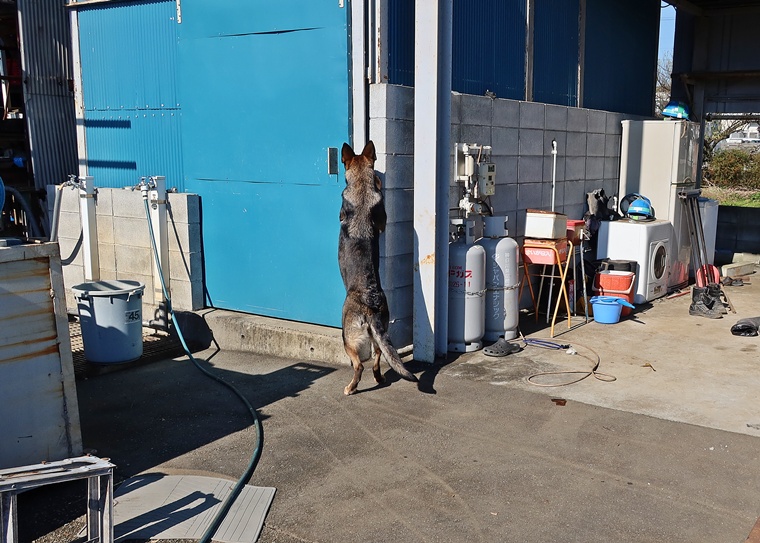
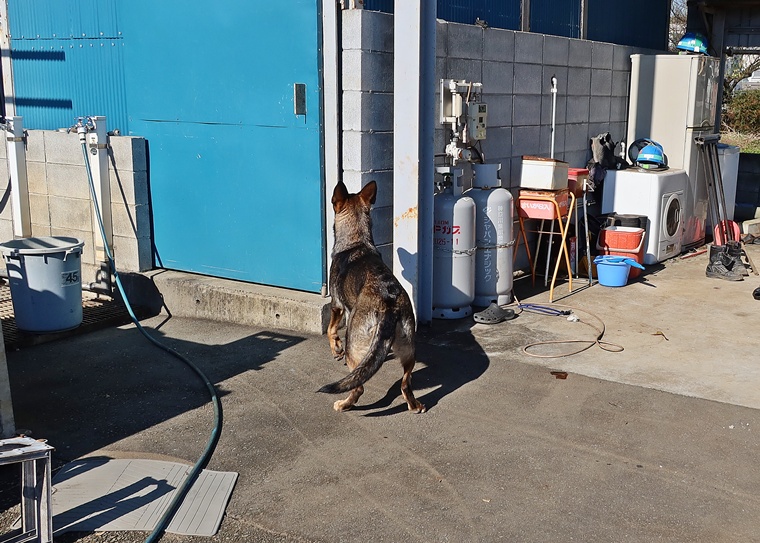
また、ハンドラーは犬が臭気を捉えた際の反応や、遮蔽空間に対して示す行動変化を正確に観察し、バークアラートへ移行するまでの一連の動きを理解することが大切です。単に捜索エリアを広げたり、設定の難易度を上げたりすることを目的とするのではなく、セントコーンへの反応からヘルパーの位置の特定、そして確実なバークアラートまでを一連の作業として安定させることが、今後のステップアップにつながります。
それぞれのUnitの現在の理解度や告知動作の安定性を確認しながら、成功する経験を積み重ね、実働で求められる確実な捜索能力とバークアラートの精度を高めていきましょう。
It is also important for handlers to carefully observe and accurately interpret their dogs’ behavioral responses when encountering the target odor, as well as any changes in behavior displayed when working around concealed spaces. Handlers should develop a clear understanding of the complete sequence of behaviors leading from initial odor recognition to a sustained bark alert.
Rather than simply expanding the search area or increasing the difficulty of the training scenarios, the priority should be to establish a reliable and consistent sequence of search behaviors—from recognizing and working the scent cone, to accurately locating the helper, and finally performing a clear and sustained bark alert.
By assessing each unit’s current level of understanding and the consistency of its bark alert, we will continue to build upon repeated successful experiences. Through this progressive approach, we aim to further develop the reliable search capabilities and accurate, consistent bark alerts required for real-world search operations.
新しい環境経験
また、今回は初めての経験となるスケルトン構造の階段の上り下りにも取り組みました。犬の視覚からは前方が透けて見える階段は、通常の階段とは異なる視覚的・足場的な刺激がありますので、犬にとって新しい環境経験となります。無理に進ませるのではなく、それぞれのまた、今回は初めての経験となるスケルトン構造の階段の上り下りにも取り組みました。スケルトン構造の階段は、踏み板の間から前方や足元の空間が透けて見えるため、通常の階段とは異なる視覚的な刺激があり、犬によっては足を踏み出すことに躊躇する場合もあります。災害現場では、瓦礫や不安定な足場、高低差のある構造物など、日常生活では経験することの少ない様々な環境に対応する必要があります。そのため、こうした特殊な構造の階段を経験することも、捜索犬としての環境適応力を高める上で大切なトレーニングの一つとなります。犬の反応を確認しながら経験を積み重ねることで、今後の様々な捜索環境への対応力につなげていきたいと思います。
Environmental Adaptability Training – Open-Riser Stairs
By gradually building positive experiences in unfamiliar environments, we aim to strengthen the dogs’ confidence and ability to adapt to the diverse structural and environmental challenges they may encounter during future search operations.
During this training session, the dogs were also introduced to a new environmental challenge: ascending and descending open-riser stairs.
Unlike conventional stairs, open-riser stairs allow dogs to see through the gaps between the steps, including the open space ahead and beneath their feet. This creates unfamiliar visual and footing-related challenges, and some dogs may initially hesitate to step onto or move across this type of structure.
In real-world disaster search operations, dogs may encounter a wide variety of challenging environments that are rarely experienced in everyday life, including rubble, unstable footing, elevated structures, and changes in ground level.
Exposure to unfamiliar structures such as open-riser stairs therefore provides a valuable opportunity to develop the environmental confidence and adaptability required of disaster search dogs.
Rather than forcing the dogs to proceed, the exercises were conducted progressively, with careful attention to each dog’s individual responses and comfort level.
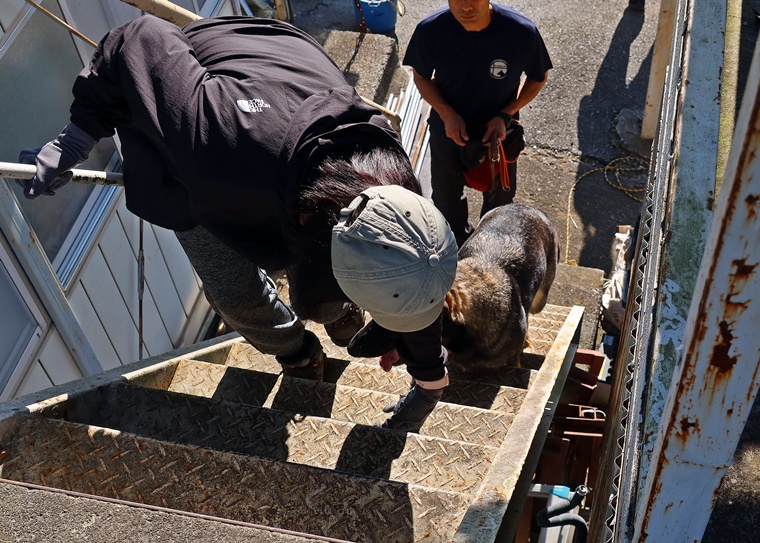
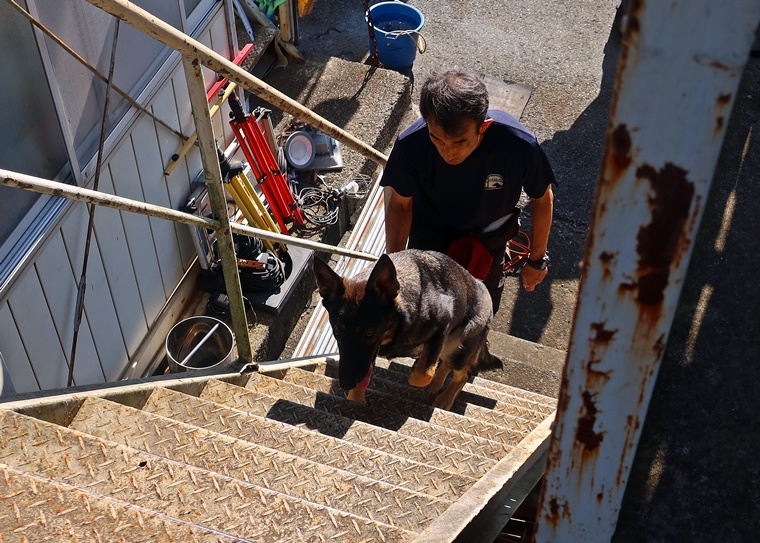
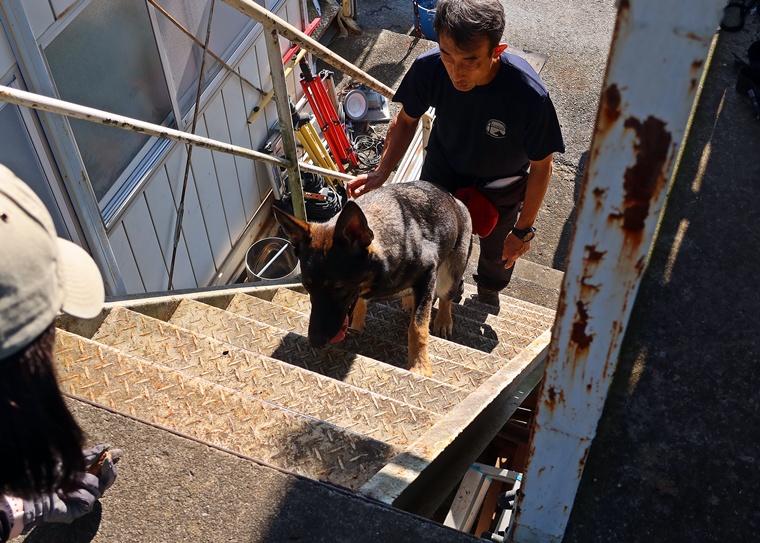
ただし、単に階段を上り下りできることだけを目的とするのではなく、それぞれの犬が足場や視覚的な刺激に対してどのような反応を示すのかを、ハンドラーが正確に観察することが重要です。不安や躊躇が見られる場合には、無理に進ませるのではなく、犬自身が足場を確認しながら一歩ずつ進めるようにサポートし、成功する経験を積み重ねていきます。また、ハンドラー自身も犬の動きや心理的な変化を理解し、必要以上のプレッシャーを与えず、安全を確保しながら適切にサポートする技術を身につけることが求められます。今回の新しい経験を通して、それぞれの犬が自信を持って様々な足場や構造物に対応できるよう、今後も段階的に環境経験を積み重ね、実働現場で求められる安全性と環境適応力の向上につなげていきましょう。
However, the objective is not simply for the dogs to successfully ascend and descend the stairs. It is equally important for handlers to carefully observe and accurately interpret how each dog responds to unfamiliar footing and visual stimuli.
If a dog shows signs of uncertainty or hesitation, the handler should avoid forcing it to proceed. Instead, the dog should be given the opportunity to assess the footing for itself and move forward one step at a time, with appropriate support from the handler. Through this gradual approach, we aim to build confidence by providing repeated positive and successful experiences.
Handlers must also develop the ability to recognize changes in their dogs’ movement, confidence, and emotional state, while learning to provide appropriate support without applying unnecessary pressure and while maintaining safety throughout the exercise.
Building upon this new experience, we will continue to introduce a variety of unfamiliar surfaces and structures in a progressive and controlled manner. Our goal is to help each dog develop the confidence to navigate different types of footing and structural environments, while further strengthening the safety awareness, environmental adaptability, and effective handling skills required for real-world disaster search operations.
HRD
限定エリアでの複数ソースに対してのTFR
HRDでは、4カ所にそれぞれ異なるソースを設定し、捜索からTFR(Trained Final Response)までの一連の流れを確認する反復トレーニングを行いました。今回は比較的狭い限定エリアでの捜索でしたが、風の流れや周囲の構造物の影響によって、ソースから発生するセントコーンの流れが変化し、場所によってはセントプールが形成されるなど、犬が示す臭気への反応にも違いが見られました。
このような環境では、犬がセントコーンやセントプールを捉えた際の反応と、実際にソースを特定した際の反応を、ハンドラーが正確に見極めることが重要になります。
HRD (Human Remains Detection)
Under these conditions, it is particularly important for handlers to accurately distinguish between the dogs’ responses when encountering a scent cone or scent pool and their responses when actually pinpointing the target odor source.
During the HRD session, four different training aids were placed at separate locations within the search area, and repetitive exercises were conducted to reinforce the complete search sequence, from locating the target odor source through to performing the Trained Final Response (TFR).
Although the search area was relatively small and clearly defined, wind conditions and surrounding structures influenced the movement and distribution of scent from the training aids. As a result, the scent cones shifted in different directions, and scent pools developed in certain locations, producing variations in the dogs’ behavioral responses to the target odor.
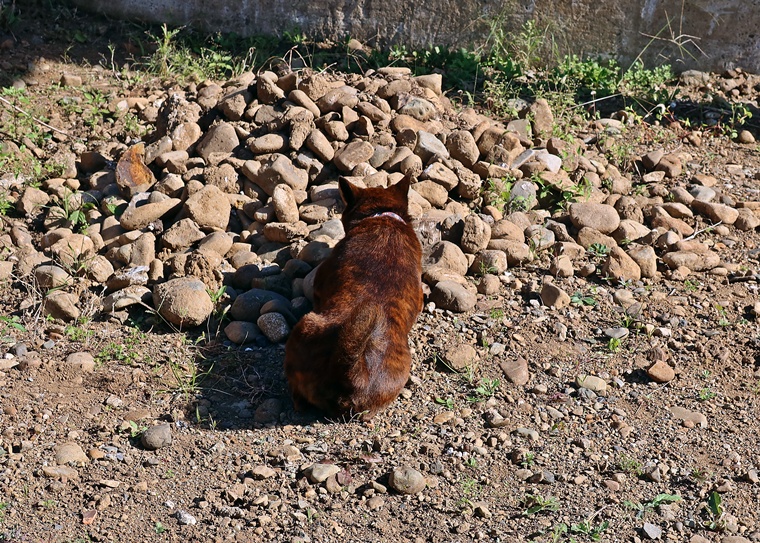
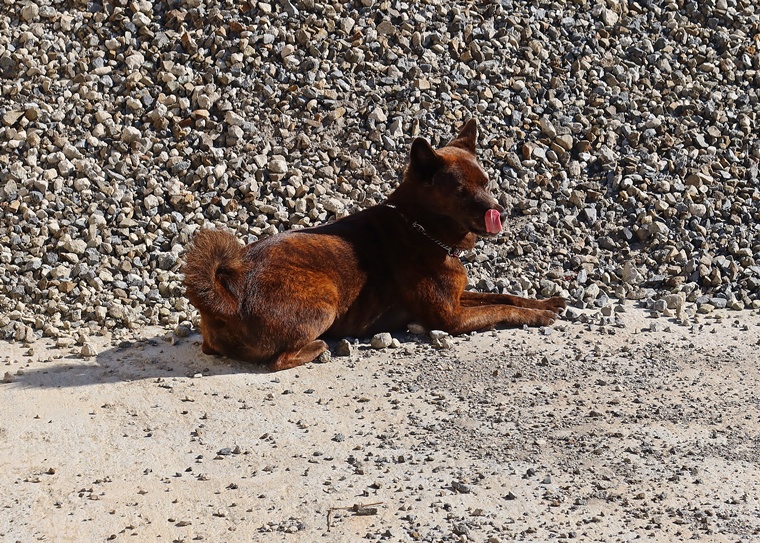
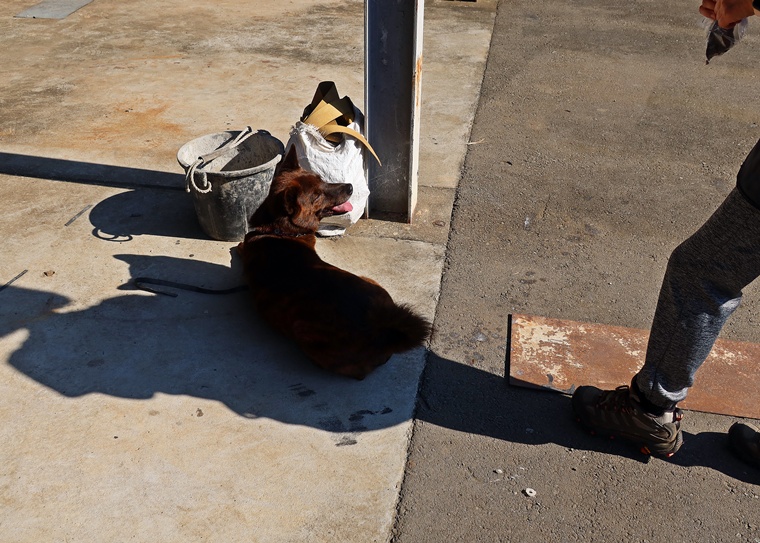
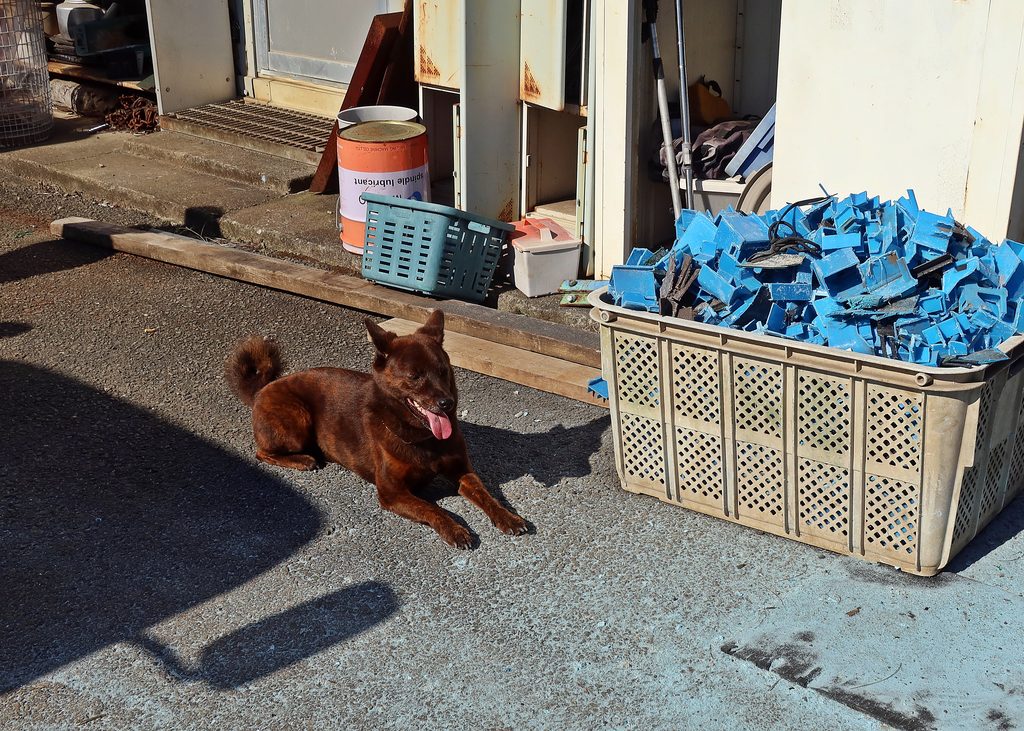
犬がどの段階で対象臭を捉え、どのような動きでソースへアプローチし、最終的にどの位置でTFRへ移行するのかを丁寧に観察しながら、捜索から告知までの一連の流れを確認しました。特に、セントプールなどに対して強い反応を示した場合でも、その場所が必ずしもソースの位置とは限りません。犬が示す行動変化を正確に読み取り、臭気の流れを理解しながら、実際のソースの位置を特定できるようにすることが、精度の高いTFRを確立する上で重要なポイントになります。また、TFRの強化では、単に告知動作を繰り返させるのではなく、犬自身が対象臭を正確に認識し、ソースを特定した上で、自信を持って安定したTFRを実行できるようにすることを重視しました。
そのためには、ハンドラーが犬の反応を適切に観察し、正しい反応や告知姿勢を維持している瞬間を的確に捉え、適切なタイミングで報酬を提示することが大切です。
HRD – Source Localization and TFR Development
To achieve this, handlers must carefully observe their dogs’ responses, accurately recognize the moments when the dog is demonstrating the desired response or maintaining the correct final indication position, and deliver the reward with precise timing to reinforce those behaviors effectively.
Throughout the exercises, particular attention was given to carefully observing when the dogs first encountered the target odor, how they worked toward the source, and where they ultimately transitioned into the Trained Final Response (TFR). This allowed us to evaluate the complete sequence of behaviors from the initial search through to the final indication.
In particular, even when a dog displays a strong response to a scent pool, that location does not necessarily correspond to the actual odor source. Accurately interpreting the dog’s behavioral changes, understanding how scent moves and accumulates within the search area, and distinguishing between the presence of target odor and the actual source location are essential for developing a precise and reliable TFR.
When reinforcing the TFR, the emphasis was not simply on having the dogs repeatedly perform the final indication behavior. Instead, the priority was to help each dog accurately recognize the target odor, pinpoint its source, and then confidently perform a clear, consistent, and reliable TFR.
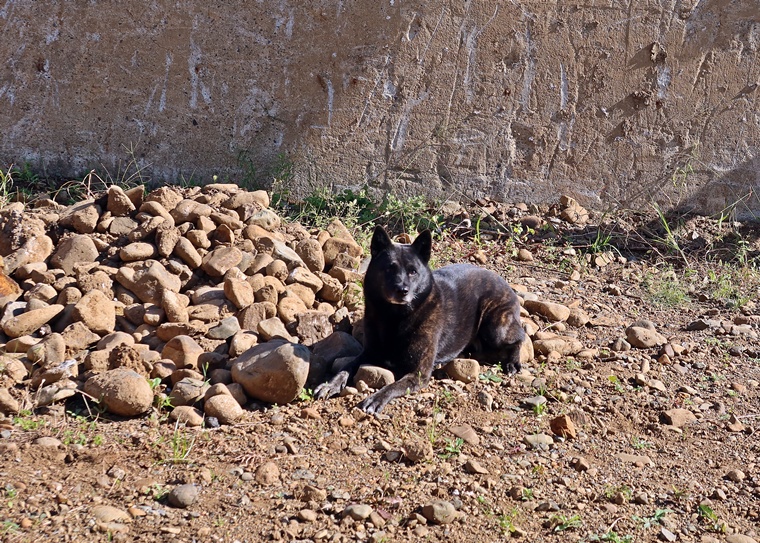
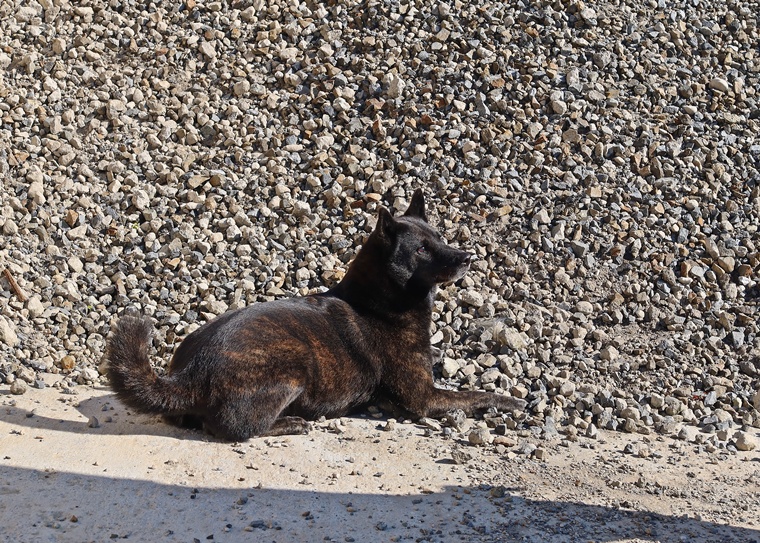
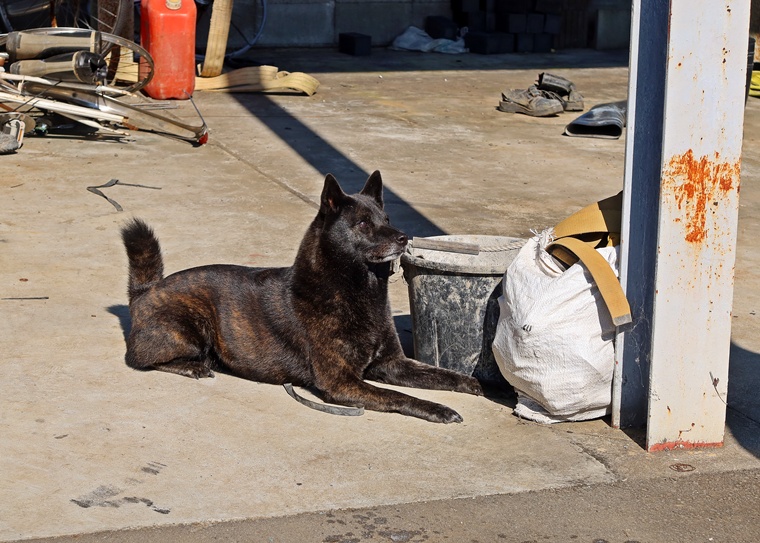
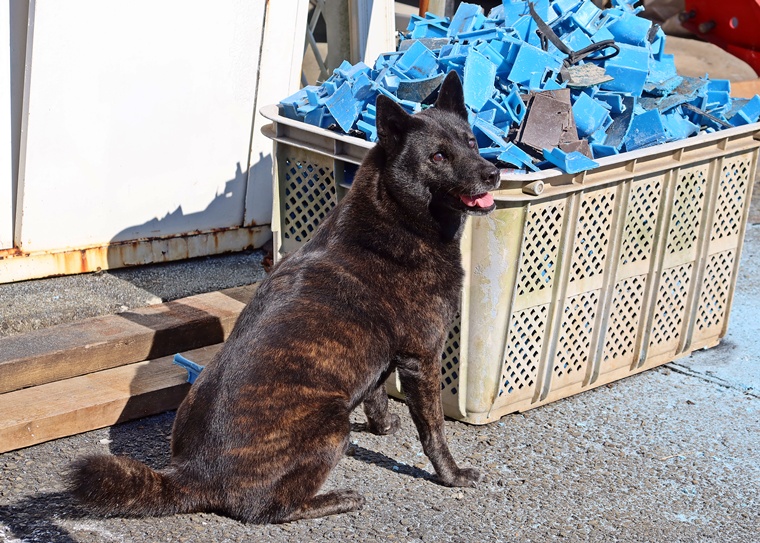
今回のように複数のソースを異なる場所へ設定することで、犬の臭気に対する反応やソースへのアプローチの違いを確認できるだけではなく、ハンドラーにとっても、犬が示す情報を基に判断する良いトレーニングとなりました。それぞれのUnitの現在の習熟度や課題に合わせながら、対象臭への反応からソースの特定、そして確実なTFRまでを一連の作業として安定させ、より精度の高いHRD捜索へとつなげていきましょう。
今回の訓練会でも、犬の捜索能力や告知動作の精度を確認するとともに、ハンドラーの観察力、判断力、報酬のタイミングを含めたハンドリングスキル、そしてUnitとしての連携について、実践的な経験を積み重ねることができました。
今後も、それぞれのUnitが抱える課題を明確にしながら、犬の持っている捜索能力を最大限に活かせるハンドラーの育成と、実働現場で確実に活動できるUnitとしての総合的な能力向上を目指していきたいと思います。
HRD – Training Evaluation and Future Development
Ultimately, we aim to develop well-coordinated dog-handler units capable of operating safely, reliably, and effectively in real-world search operations.
By placing multiple training aids at different locations within the search area, we were able not only to observe variations in the dogs’ responses to the target odor and their approaches to locating each source, but also to provide handlers with valuable opportunities to practice making decisions based on the information provided by their dogs.
Moving forward, training will continue to be tailored to the current proficiency level and individual challenges of each unit. Our priority is to establish a reliable and consistent sequence of behaviors, from recognizing the target odor and accurately pinpointing its source to performing a clear and reliable Trained Final Response (TFR). By progressively strengthening this complete sequence, we aim to further improve the accuracy and reliability of HRD searches.
Throughout this training session, we were able to assess the dogs’ search capabilities and the accuracy and consistency of their final indications, while also gaining valuable practical experience in developing the handlers’ observation, decision-making, and handling skills, including precise reward timing, as well as effective coordination between dog and handler.
Moving forward, we will continue to identify and address the individual training challenges of each unit. Our goal is to develop handlers who can make full use of their dogs’ natural search capabilities, while progressively strengthening the overall performance of each unit.
NSAでは今後も、各Unitの習熟度や課題に応じた段階的なトレーニングを継続し、実働現場で求められる犬の高い捜索能力、ハンドラーの的確な観察と判断、そして安全かつ確実に活動できるUnitとしての総合的な能力向上を目指して、継続的な訓練に取り組んでまいります。
NSA will continue to implement progressive training tailored to the proficiency level and individual training needs of each unit. Through continued training, we aim to further develop the capabilities required for real-world operational deployment: strong search performance from the dogs, accurate observation and sound decision-making from the handlers, and the overall ability of each unit to operate safely, reliably, and effectively in the field.
NSAの活動は、民間ボランティアによる行方不明者の捜索活動です。
多くの方々からご支援いただくことで、より速く、より多くの行方不明者捜索にサーチドッグを派遣することができます。皆様のご支援をお願いいたします。
NSA’s activities are carried out by civilian volunteers.
With the support of many individuals, we can deploy search dogs more quickly and to a greater number of missing person cases.
We sincerely ask for your continued support.

関連記事
-
 NPO法人 北東北捜索犬チーム Trailig/HRD Workshop_2026.10.04
 -
2026.11.03/NPO法人 北東北捜索犬チーム Trailing/HRD 適性試験
-
2026.10.25/ NSA (Trailig/HRD/Disaster)訓練会(相模原市内)
-
2026.10.11/ NSA (Trailig/HRD/Disaster)訓練会(相模原市内)ー終了しましたー
-
NSA Trailing/Disaster/HRD 訓練会レポート_2026.09.27
-
2026.10.10/REDOG MRT プレ試験ー終了しましたー
-
2026.10.04/NPO法人 北東北捜索犬チーム Trailing/HRD Workshopー終了しましたー
-
NSA Trailing/Disaster/HRD 訓練会レポート_2026.09.13